ARCHITECT EXPLAINS
Why New England Homes Feel Made for Autumn
____________________
Autumn doesn’t entirely change a New England coastal home—it reveals the warmth, character, and timeless materials that were there at all seasons. From weathered cedar and changing landscapes to layered textiles and warm lighting, discover why this style feels especially at home in fall.
SEPTEMBER 28, 2026
BY: MARIA CEBAN


ON THIS PAGE:
Introduction
When the Landscape Changes, the House Changes With It
The Coastal Palette Gets Warmer, Not Replaced
Materials That Were Always Meant for Autumn
The Return of Warm Light
New England Coastal with a Touch of Ralph Lauren
Fall Decorating Without Turning the House Into a Theme
Architect’s Perspective: Why New England Homes Feel Cozier in Autumn
The Bottom Line: Perhaps Autumn Was There All Along
In New England, summer tends to disappear almost overnight—bright-blue, lush, blooming hydrangeas fade into muted shades of mauve and parchment; leaves of deciduous trees like maple and walnut wilt at their edges while lawns collect the first scattering of yellow, orange, and red leaves; and early mornings have just enough chill in the air where opening a window becomes a daily ritual that accompanies a morning coffee. Not only does nature seem to change and quiet down, but so do the timeless, cedar-shingled New England coastal homes. Gray, aged siding peeking through copper and amber foliage, brick chimneys contrasting with an overcast sky, and warm lamplight shining through divided-lite windows are all quintessential symbols of this time of year.
Perhaps the reason why New England coastal homes seem to fit into the fall season so naturally is because the season doesn’t require them to change. There is no need to change the entire aesthetic of the house with orange and brown accessories or replace its coastal identity with an entirely different style or aesthetic. Actually, autumn brings out the best in a New England coastal home: the warmth of natural materials, the beauty of weathering, the intimacy of good lighting, and an architecture designed around the changing seasons.
Cedar shingles that remind us of breezy oceanside beside hydrangeas in July begin to look romantic and soft beneath a red maple in October. The comfortable linen sofa, suited for an open-window summer afternoon, welcomes a maroon wool throw when the temperature falls. The porch that hosted gatherings with iced tea and sandy feet becomes a place for a quiet “coffee with a book” on a crisp morning. All of this happens while the fireplace, abandoned for the summer, gradually becomes the center of the room again.
This edition of Salt & Still’s Architect Explains demonstrates that autumn doesn’t transform a New England home so much as it reveals what was there all along: comfort, character, and serenity.
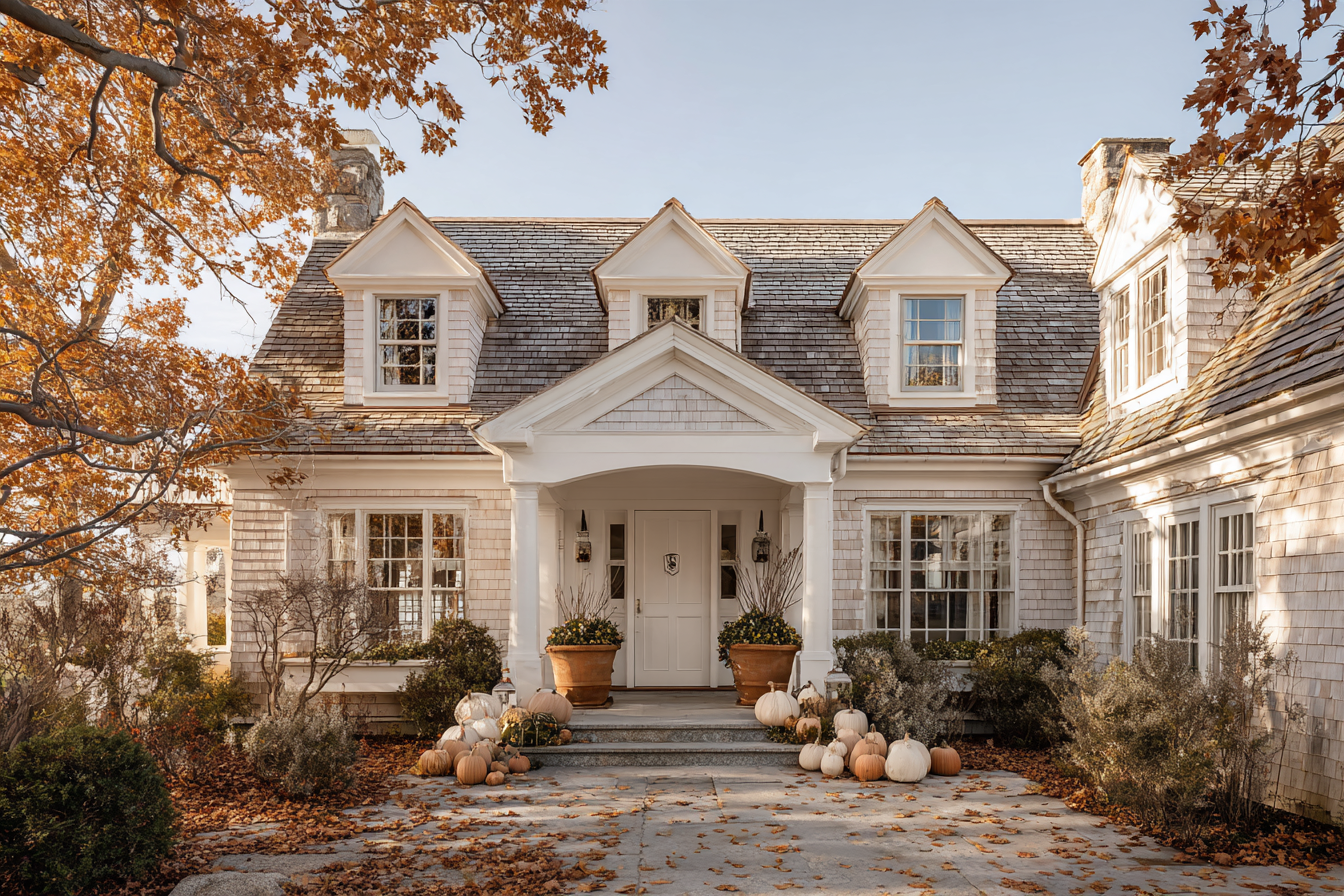
Gray, aged siding peeking through copper and amber foliage, brick chimneys contrasting with an overcast sky, and warm lamplight shining through divided-lite windows are all quintessential symbols of this time of year.
01 ———–
When the Landscape Changes, the House Changes With It
One of the most remarkable characteristics of timeless New England coastal homes is their relationship with the surrounding landscape—instead of feeling as if they were inserted into their surroundings, the two seem to work alongside each other, which is especially apparent during the fall season.
This relationship is visible all year round; however, it is more subtle in the summer. Green gardens tend to soften the appearance of weathered cedar shingles, while the signature white trim, climbing roses, hydrangeas, and leafy trees create the lightness associated with New England coastal homes. In the fall, however, the colors of autumn introduce the perfect contrast between nature and homes. When green changes to ochre, rust, burgundy, faded gold, and shades of brown, the light and restrained architecture, which blends in with the landscape, instead becomes its complementary backdrop.
Out of all the typical materials, weathered grey shingles are particularly beautiful this time of year because they do not compete with the changing foliage; however, neither to fieldstone foundations, brick chimneys, white-painted trim, natural wood doors, and aged copper. Because each of these materials has its own variation of aging and patina, they sit comfortably against the changing and imperfect landscape.
Even the gardens participate in the seasonal transition. Hydrangeas dry their blooms and become muted and sculptural. Ornamental grasses and bushes turn golden and brown. Climbing vines deepen their green color and even turn maroon. Fallen leaves, undisturbed by people, gather around stone paths, porch steps, and in the yards. What in the summer would be considered an “untidy” landscape becomes romantic and wonderfully atmospheric in the fall.
There is an important design lesson here—a beautiful New England fall home doesn’t need to compete with autumn; instead, it needs to give the season a place to unfold.
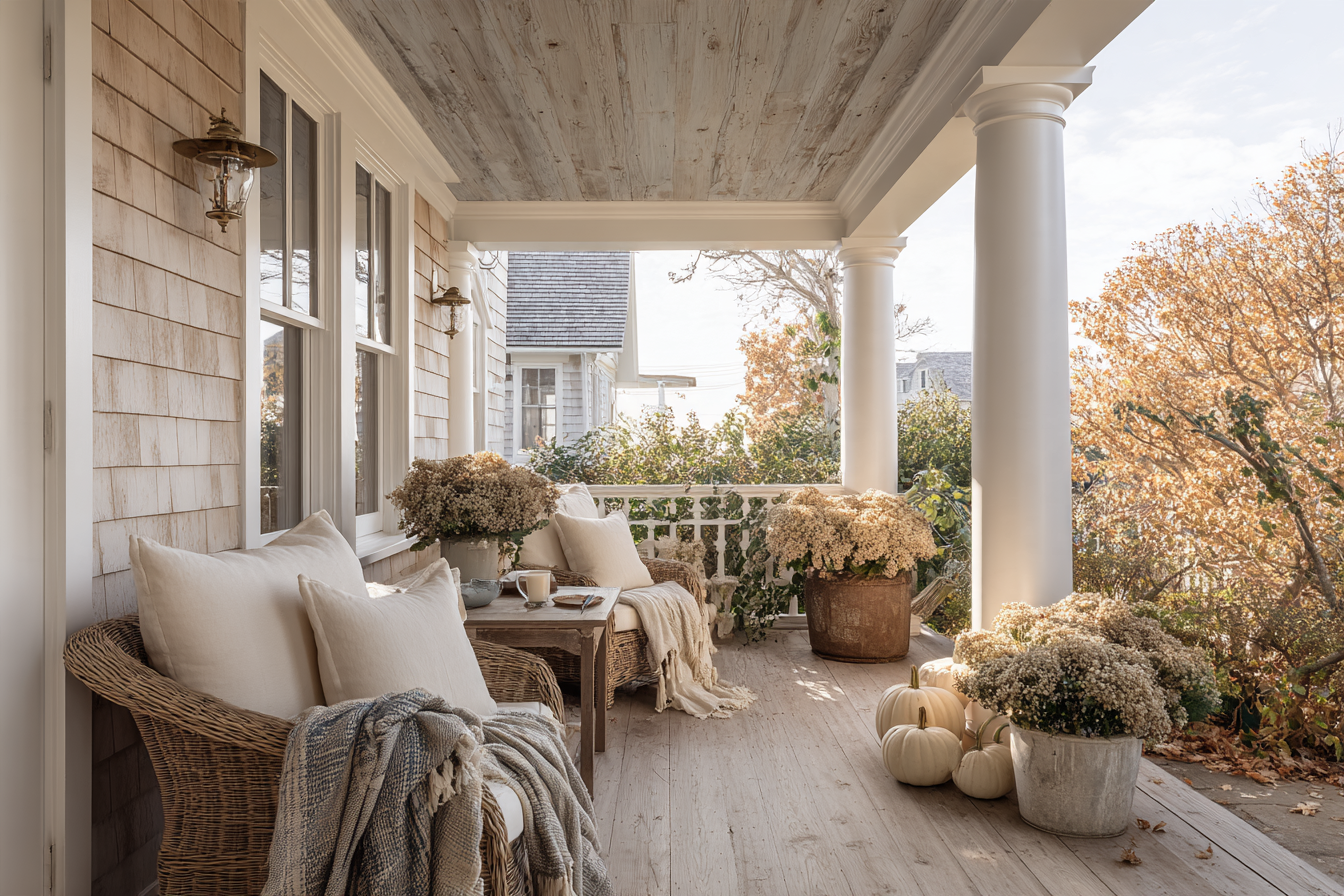
A beautiful New England fall home doesn’t need to compete with autumn; instead, it needs to give the season a place to unfold.
02 ———–
The Coastal Palette Gets Warmer, Not Replaced
As an architect, I believe that the easiest mistake to make when decorating a New England coastal home for fall is assuming the entire palette and aesthetic needs to change, because it doesn’t.
No matter the season, a New England coastal interior should appear recognizably coastal and predominantly consist of warm whites, creams, weathered blues, muted greens, natural oak, aged brass, and soft grays. Instead of replacing them, autumn should introduce a deeper color layer into this space,
A room painted pale blue, for example, does not need to be repainted orange in the fall. Instead, a new tobacco-colored leather chair may be purchased at an estate sale, a camel wool throw may be taken out from the attic, an antique wood table may hold candles and dried flowers instead of fresh hydrangeas, and a touch of burgundy may be added in textiles. Muted navy feels particularly beautiful against aged brass and warm lamplight. Sage can deepen toward olive, while the sandy neutrals of summer transition effortlessly into warmer taupes and earthy browns.
Seasonal change in the color palette should not feel like a drastic change; instead, it should look more like its summer brightness has been turned down. New England coastal interiors don’t abandon their identity to accommodate a new season; they absorb the season and change like the landscape outside.
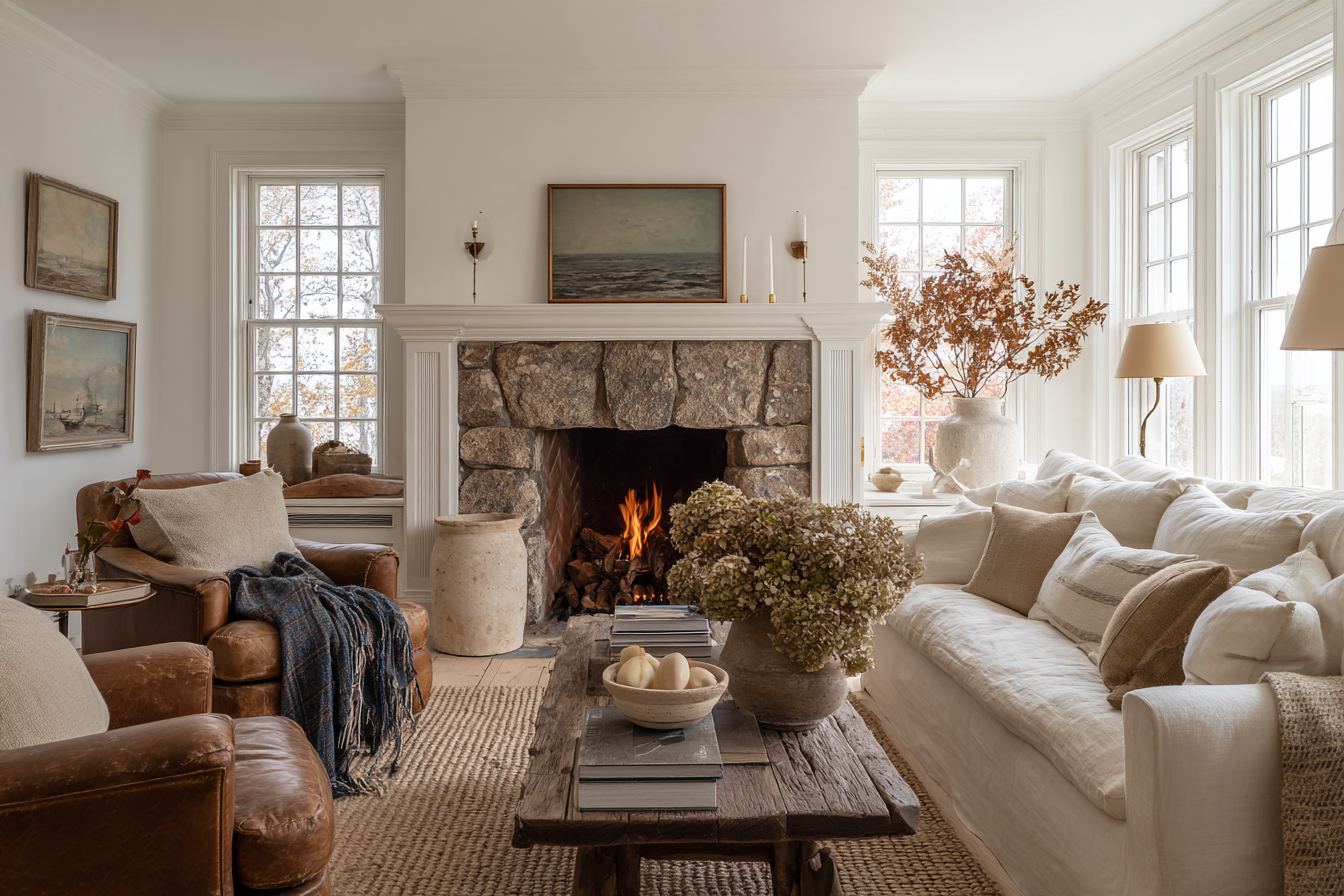
New England coastal interiors don’t abandon their identity to accommodate a new season; they absorb the season and change like the landscape outside.
03 ———–
Materials That Were Always Meant for Autumn
While summer celebrates lightness, autumn makes us notice texture and dimensionality.
When autumn begins, small details like the grain of an old floor become more noticeable. A linen curtain moving in the crisp morning wind appears to be airier. Stone around the fireplace in the living room feels more tactile, while the soft patina of brass seems warmer under lamplight than it did beneath the bright sun of July. Leather appears richer in color and texture. This is the reason why natural materials are essential to timeless New England coastal homes—they don’t belong in a single season.
The goal of a successful space is to let these ever-changing visual qualities of natural materials become more noticeable by highlighting them with seasonal textures, textiles, and decor pieces. Additions such as a heavy wool throw blanket placed across the arm of a linen sofa, a woven basket filled with firewood placed near the fireplace, a large ceramic vase filled with clipped branches, or a heavy ornamental rug can change the emotional temperature of a space without fundamentally changing its design.
The most successful interiors appear warmer in the fall because of what they are made from, not because of what has been added to them.
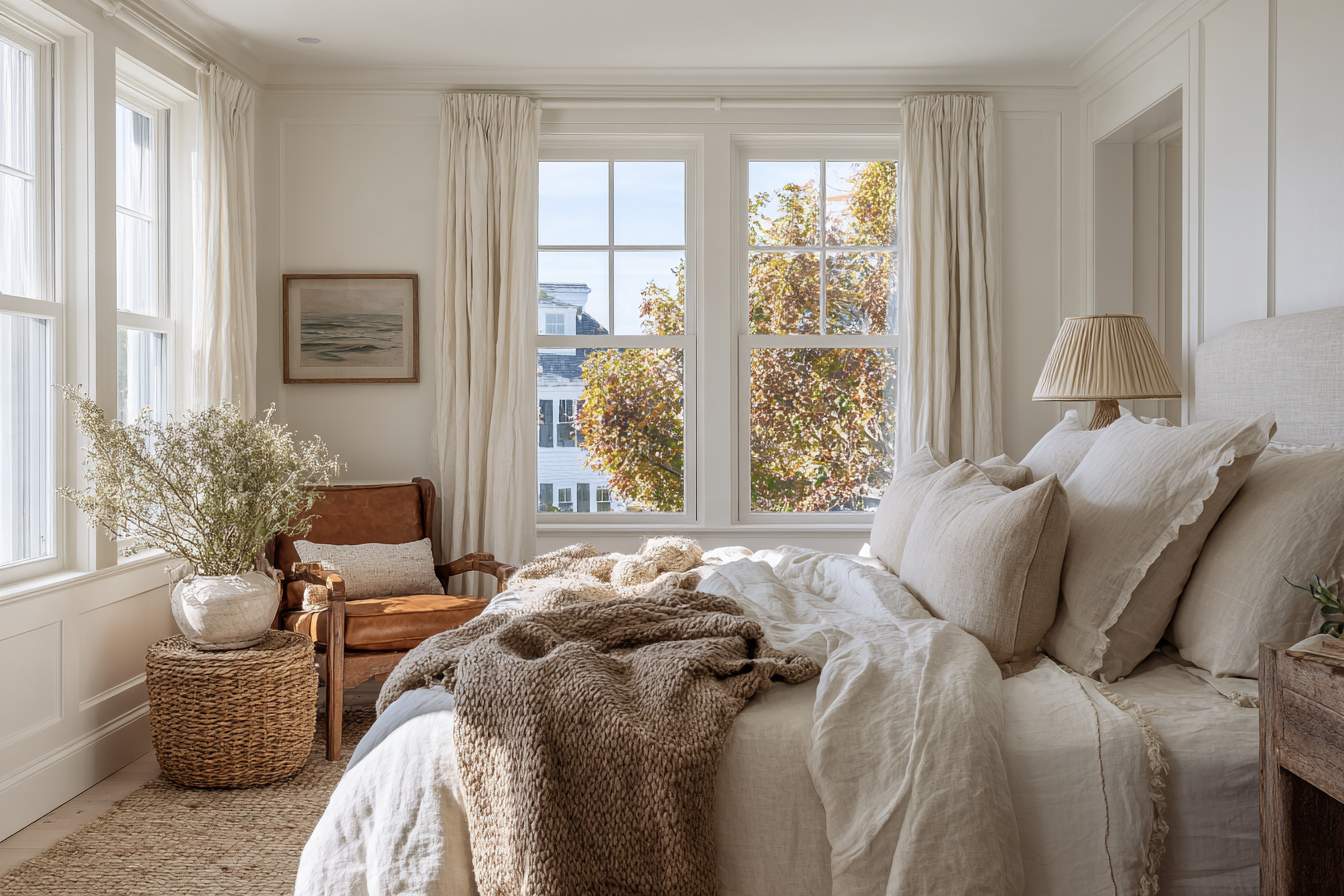
The goal of a successful space is to let these ever-changing visual qualities of natural materials become more noticeable by highlighting them with seasonal textures, textiles, and decor pieces.
04 ———–
The Return of Warm Light
Every autumn, there is a point when you notice turning on the lamps before dinner; it is a small action that changes mood in the entire house.
During a New England summer, natural light carries an interior well into a late evening. Rooms feel connected to their surroundings as windows remain open and curtains move in the breeze. As September rolls in, darkness arrives earlier, and artificial lighting takes on a larger, more important role in creating atmosphere in a home. This is my layered lighting in all seasons, but summer, is particularly important.
Traditional-feeling interiors benefit from task lighting rather than recessed or overhead lighting: a table lamp beside a reading chair, sconces flanking a fireplace, a pendant above the kitchen island, a shaded lamp glowing on a console, lanterns illuminating the porch beyond the windows.
Warm-colored light draws attention to the texture of elements that fill the space. Wood grain appears deeper, painted walls soften, patina on brass elements shines in a new light, and architectural details receive new shadows. A simple room can be transformed into an extraordinary, rich-appearing one with clever illumination.
Perhaps that is part of what we mean when we describe a home as cozy. Coziness isn’t an object you can purchase. It is an accumulation of smaller conditions—warm light, comfortable materials, enclosure, familiarity, and places that encourage people to stay. Autumn simply makes us notice them again.
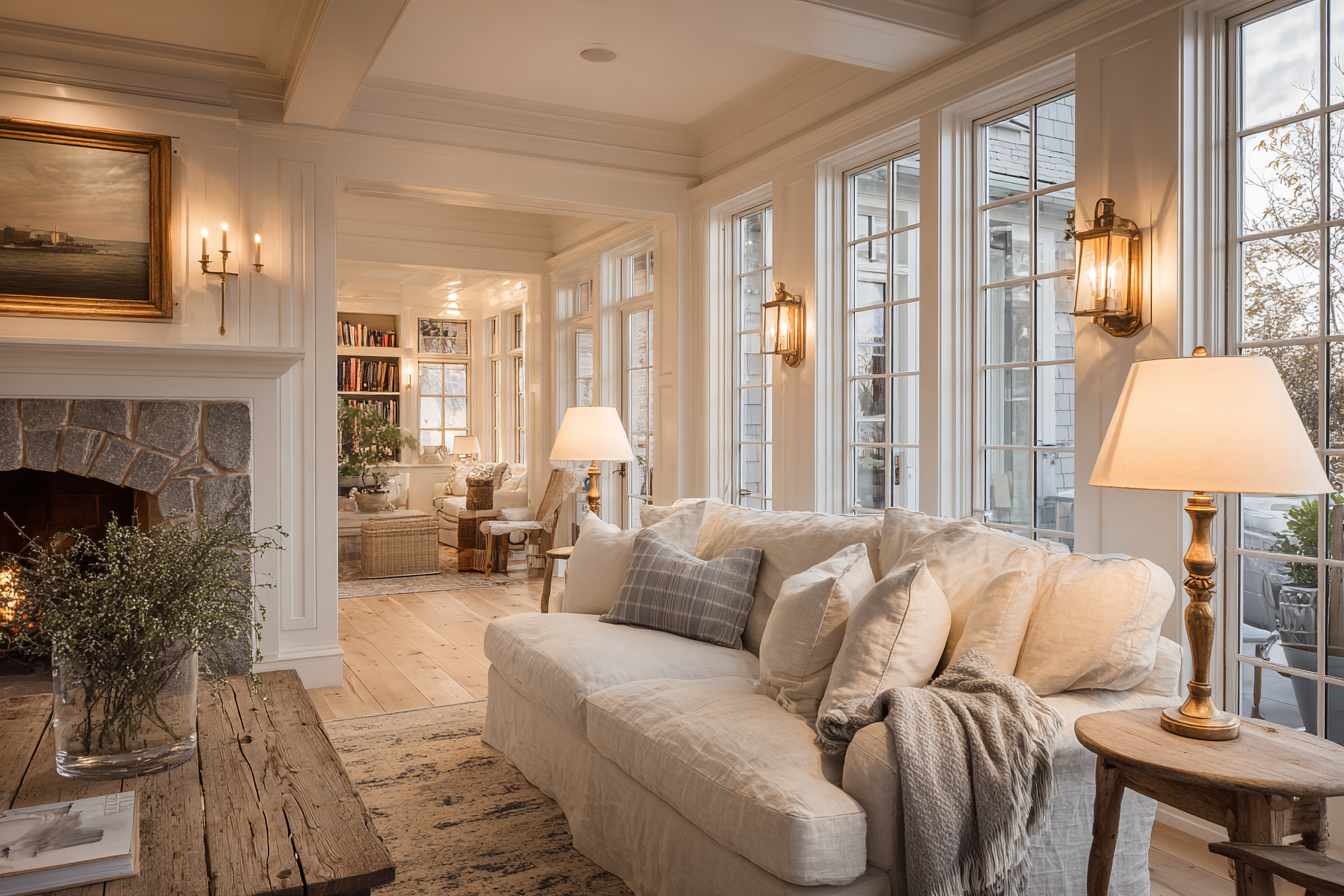
Warm-colored light draws attention to the texture of elements that fill the space. Wood grain appears deeper, painted walls soften, patina on brass elements shines in a new light, and architectural details receive new shadows. A simple room can be transformed into an extraordinary, rich-appearing one with clever illumination.
05 ———–
New England Coastal with a Touch of Ralph Lauren
The most compelling quality of New England autumn is the constant restraint mixed with richer, collected character that is usually associated with old country houses.
The summer “backbone” always remains in the home. White-painted millwork, linen upholstery, weathered blue, natural wood, woven textures, and perhaps a view toward the garden still establish the coastal character, no matter the season. Autumn, in turn, allows deeper notes to enter the room: an old leather chair, a wool blanket, a restrained tartan or plaid, dark wood, aged brass, stacks of books, an antique landscape painting, or a deeper navy lampshade.
When these details are introduced with care, a New England coastal interior receives a touch of Ralph Lauren aesthetic without turning a home into a costume. The goal isn’t to suddenly create an English hunting lodge beside the Atlantic; it’s to borrow the richness, layering, and sense of history while allowing the lighter New England coastal foundation to remain visible. This works well because both aesthetics value objects that look as if they have lived a life before being settled into a home. Things like antiques, books, old artwork, natural fibers, leather, wood, and brass bring depth that perfectly matched seasonal décor rarely can.
When done successfully, the room begins to feel autumnal not because every object references fall, but because it has become slightly more intimate, tactile, and collected.
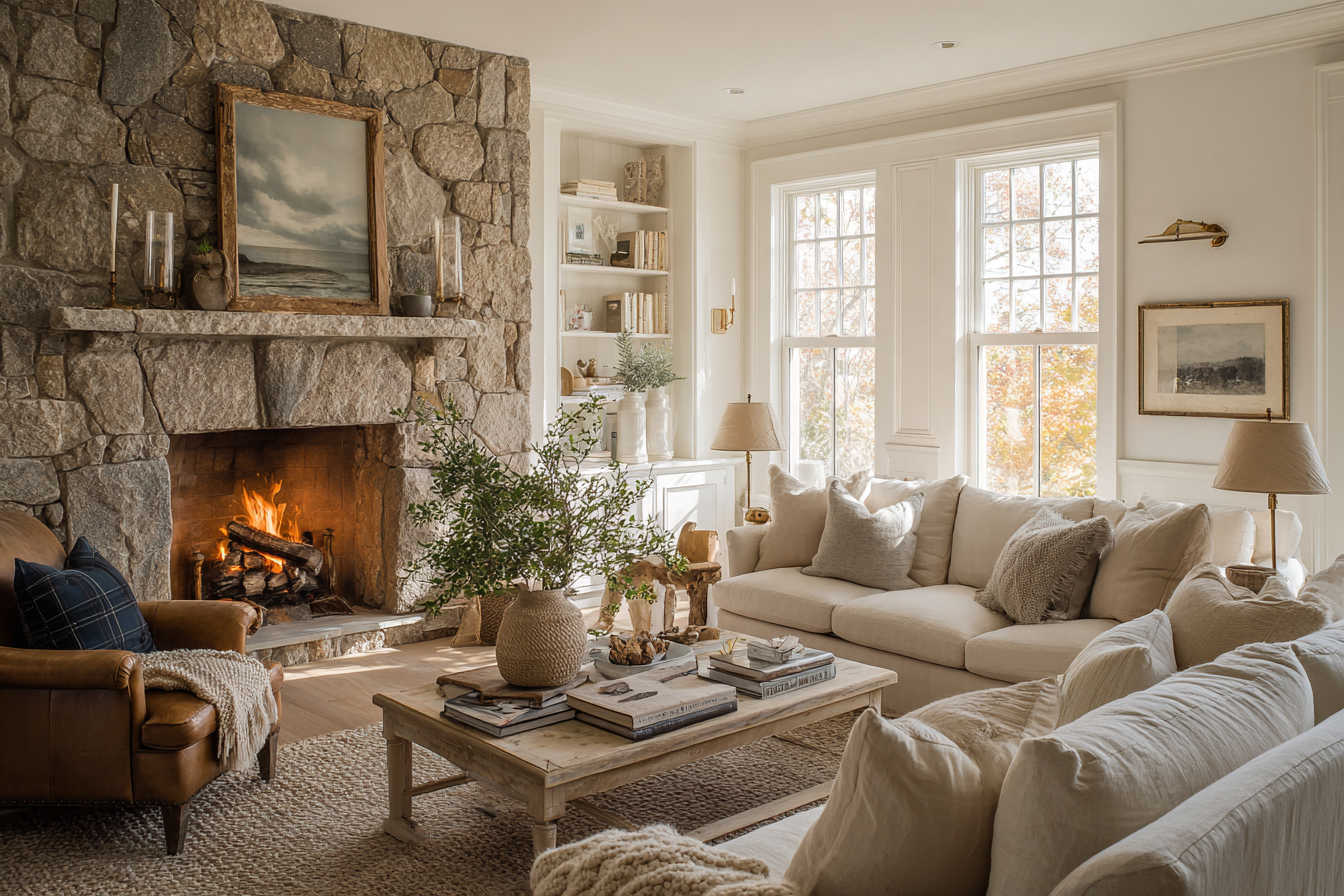
The goal isn’t to suddenly create an English hunting lodge beside the Atlantic; it’s to borrow the richness, layering, and sense of history while allowing the lighter New England coastal foundation to remain visible.
06 ———–
Fall Decorating Without Turning the House Into a Theme
Seasonal decorating is a beautiful hobby, but the challenge is knowing when to stop and not turn a home into a theatrical setup.
For a classic New England coastal home, the best autumn décor is one that looks as though it could have come from the landscape, kitchen, or garden rather than a seasonal aisle. Inside, dried hydrangeas can remain in an old ceramic vessel long after their summer color has faded. Branches with turning leaves can fill a larger vase, while pears or apples gathered in a bowl introduce seasonal color to the kitchen without feeling staged. Firewood, books, heavier textiles, candles, seasonal branches, and perhaps one or two restrained plaids can create warmth without overwhelming the architecture.
The same method applies to the outdoor decor. A simple wreath, a few pumpkins, lanterns, and the existing autumn garden may be all the porch needs. The common mistake, especially when decorating the exterior, is layering autumn on top of a house until the house itself disappears.
When every surface contains pumpkins, leaves, signs, garlands, and seasonal colors, the eye stops noticing the beautiful things that were already there: the fireplace surround, the old floorboards, the window casing, the antique table, the view into the garden. Good seasonal decorating should draw your attention back to the home, not away from it.
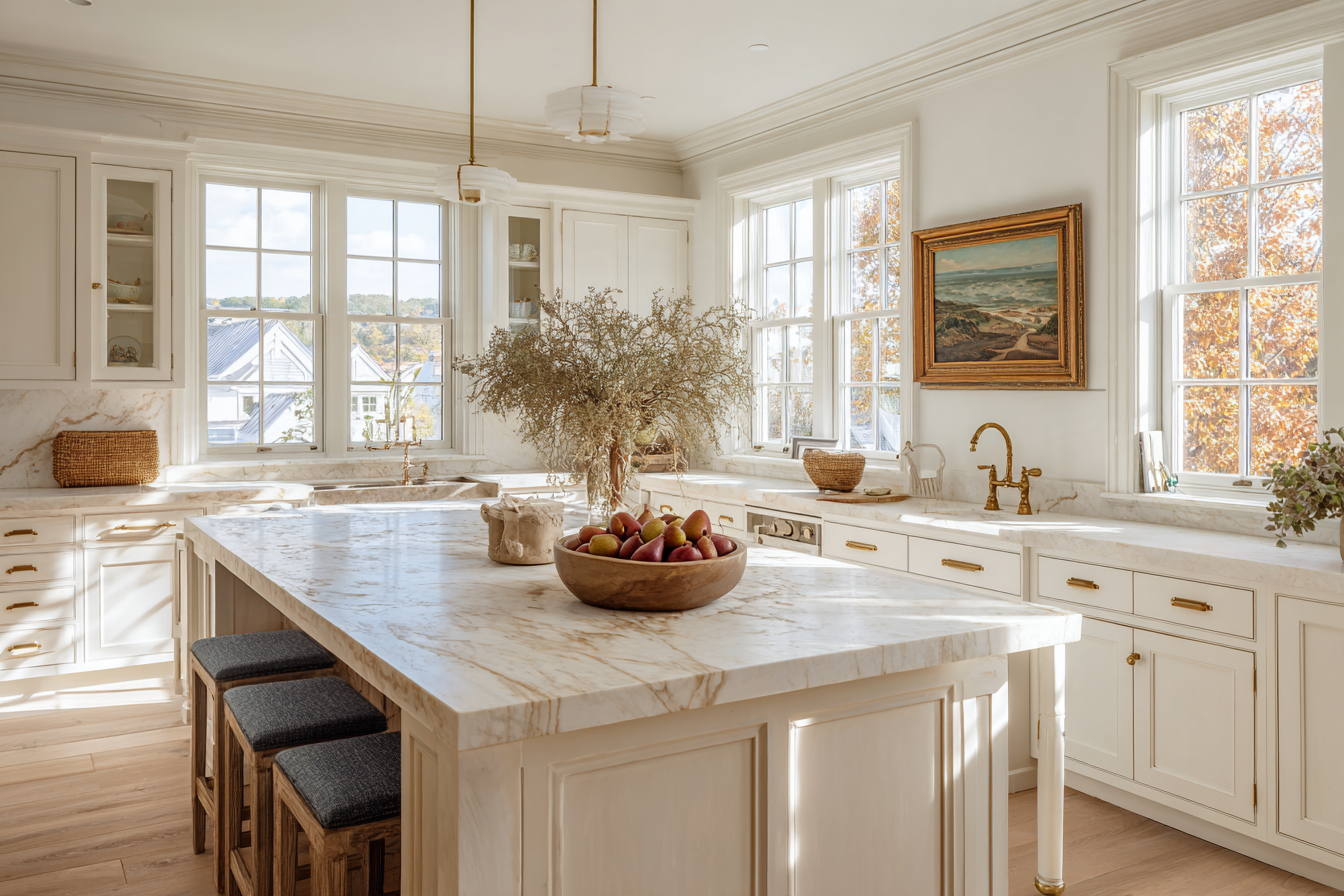
For a classic New England coastal home, the best autumn décor is one that looks as though it could have come from the landscape, kitchen, or garden rather than a seasonal aisle.
07 ———–
Architect’s Perspective: Why New England Homes Feel
Cozier in Autumn
Part of what makes New England coastal homes feel special in the fall goes beyond how they look because fall changes the way people live inside them.
The windows that stayed open during breezy summer evenings begin to close. Dinner moves from the porch to indoors. The kitchen becomes warmer and busier as it hosts gatherings and seasonal cooking and baking. Lamps come on earlier and graze spaces with warm light. Blankets return to sofas, fireplaces come back on, and living rooms become the main gathering spaces again. Evenings seem to become inviting for books, cooking, conversation, and staying home.
Architecture supports this transition because timeless New England coastal homes were never designed around summer, even though this style is heavily associated with the summer aesthetic. And this is precisely what separates a style from the simplified aesthetic found online—a coastal home isn’t a summer house aesthetically frozen in July. It should be able to hold every season.
The faded blues and linen of summer don’t need to disappear when autumn arrives, just as the deeper woods and wool of October don’t feel out of place beside the coast. A home with a strong architectural foundation and honest materials can change subtly throughout the year without ever losing its identity.
08 ———–
The Bottom Line: Perhaps Autumn Was There All Along
Imagine your home on an October evening, when leaves have gathered along a stone walk, hydrangeas beside the porch have faded into muted shades of rose, pumpkins line steps to the entry door, and cedar shingles look almost silver beneath the changing trees.
When looking through the windows, one will still see coastal rooms. There are pale walls, natural wood, linen, perhaps a touch of weathered blue. But now there is wool folded over the sofa, firewood beside the hearth, a deeper shade of navy or olive somewhere in the room, and the warm glow of brass under lamplight. Nothing has been transformed, yet everything feels different.
That, to me, is why New England homes feel made for autumn.
Autumn brings forward everything that New England coastal homes already do well: architecture connected to landscape, materials allowed to age, rooms designed around warmth and gathering, and interiors comfortable enough to evolve rather than constantly reinvent themselves.
A beautiful New England home doesn’t need to be dressed for autumn.
It simply needs to let autumn in.