COASTAL DESIGN SCHOOL
Beyond the Pumpkin:
9 Key Coastal-Inspired Thanksgiving Decorating Ideas
That Feel Timeless
____________________
From faded hydrangeas and antique flatware to layered linens and warm lighting, discover how to decorate for Thanksgiving with the grace and elegance of a New England coastal home.
NOVEMBER 4, 2026
BY: MARIA CEBAN


ON THIS PAGE:
Introduction
Bring the November Landscape Indoors
Create a Welcoming Arrival, From Porch to Entryway
Let Weathered Materials Do the Decorating
Dress the Thanksgiving Table in Linen, Not Holiday Prints
Create Contrast Through Texture, Not Excess
Set the Mood With Lamps Before Guests Arrive
Set a Thanksgiving Table That Looks Collected, Not Coordinated
Decorate With Family History
Let Scent Become the Invisible Layer of Decorating
An Architect’s Perspective: Why Timeless Thanksgiving Decorating Begins With Scaling Back
The Bottom Line: The Art of Thanksgiving, Beyond the Decorations
New England coastal homes have a special kind of beauty around Thanksgiving. As the summer crowds disappear, hydrangeas in the gardens fade into shades of brown and dusty mauve, and the trees that have framed homes in green turn into flaming masterpieces, the home’s interior changes as well, becoming more centered on indoor life.
Thanksgiving is especially receptive of this change, as it is a holiday centered on gathering, tradition, and comfort of home. Yet every year there is pressure to transform a home using seasonal memorabilia and decorations, placing pumpkins on every surface, changing the accent color palette, and adding decorative objects only to replace them a few weeks later.
What homeowners and decorators forget is that the most beautiful New England coastal homes do not rely heavily on seasonal decorations to feel seasonal. Their signature character comes from how the existing materials, finishes, textiles, and decor objects respond to the changing landscape beyond the windows. These elements already possess the warmth and richness that make autumn decorating so appealing, and Thanksgiving simply offers an opportunity to bring them forward. So the first step of timeless Thanksgiving decorating must be to consider what already exists in a home before buying themed decor.
This edition of Salt & Still’s Coastal Design School discusses nine key coastal-inspired Thanksgiving ideas that go beyond themed seasonal decor and create holiday atmosphere through the use of natural materials, thoughtful layering, and establishing a connection with the outdoors, bringing out an understated elegance in a home.
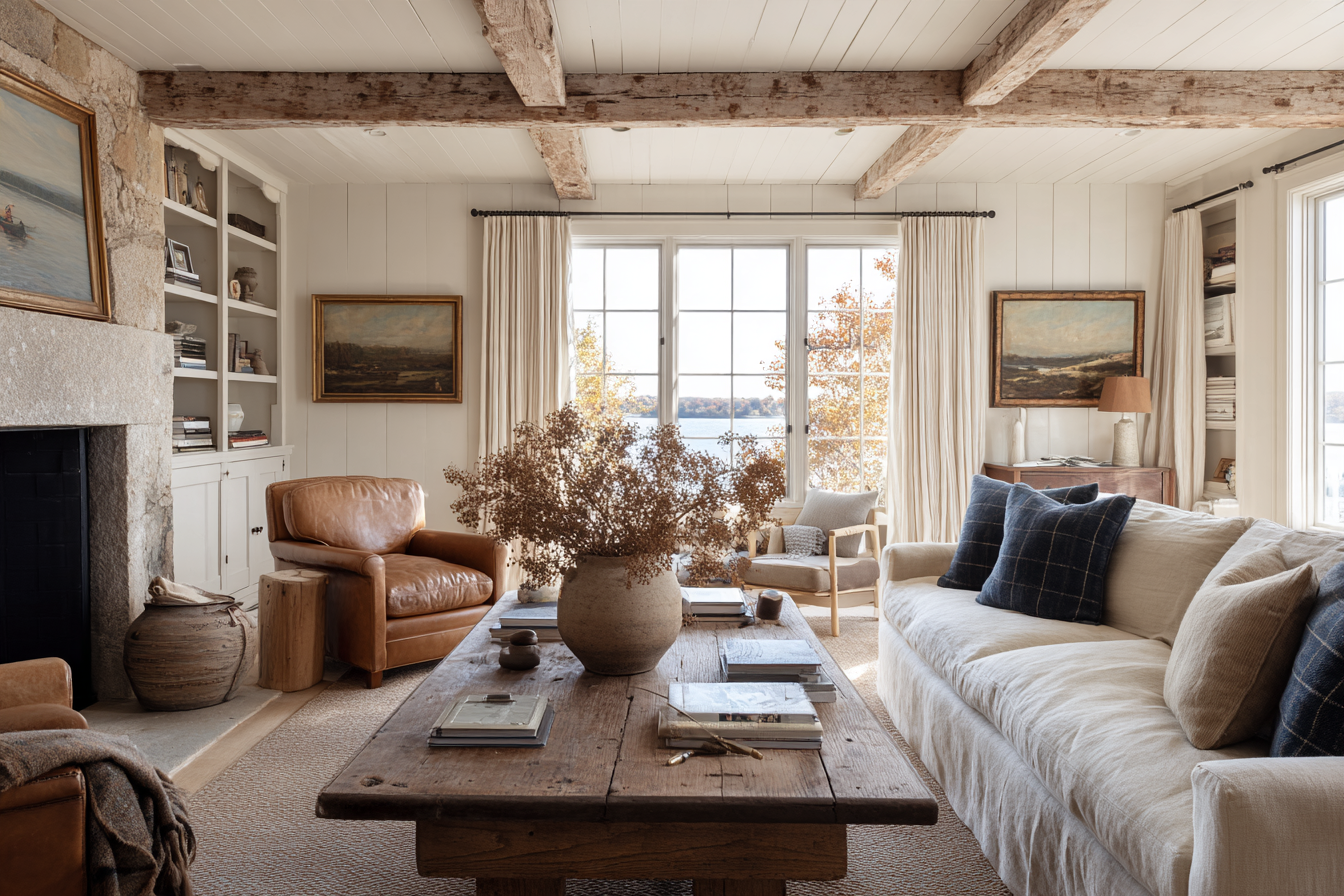
What homeowners and decorators forget is that the most beautiful New England coastal homes do not rely heavily on seasonal decorations to feel seasonal. Their signature character comes from how the existing materials, finishes, textiles, and decor objects respond to the changing landscape beyond the windows.
01 ———–
Bring the November Landscape Indoors
Thanksgiving decorations can start outside the home and draw inspiration from the changing landscape.
In November, New England landscapes change from the fiery colors of early autumn to more muted, dark shades, often consisting of bare branches, faded flowers and leaves, dull evergreen foliage, and warm browns of leaves on the ground. Instead of filling a home with artificial and cliché seasonal arrangements, bring these elements indoors, continuing the outdoor palette indoors. For example, dried hydrangeas are particularly well suited to New England coastal interiors, where their faded shades of sage, parchment, mauve, and brown complement weathered wood, linen, and muted blue. Similarly, a large arrangement of branches of varying heights set in a stoneware vase at the entry table can become a welcoming and transitional element.
Seasonal produce provides another natural decorating opportunity. Pears, apples, walnuts, and other late-autumn harvests can be arranged in wooden bowls or handmade pottery. Their colors are appropriate for Thanksgiving without introducing the orange-and-black palette associated with mass-produced fall decor.
The goal of this decorating technique is not to recreate the outdoors inside but to establish a subtle relationship between the interior and the season surrounding it.
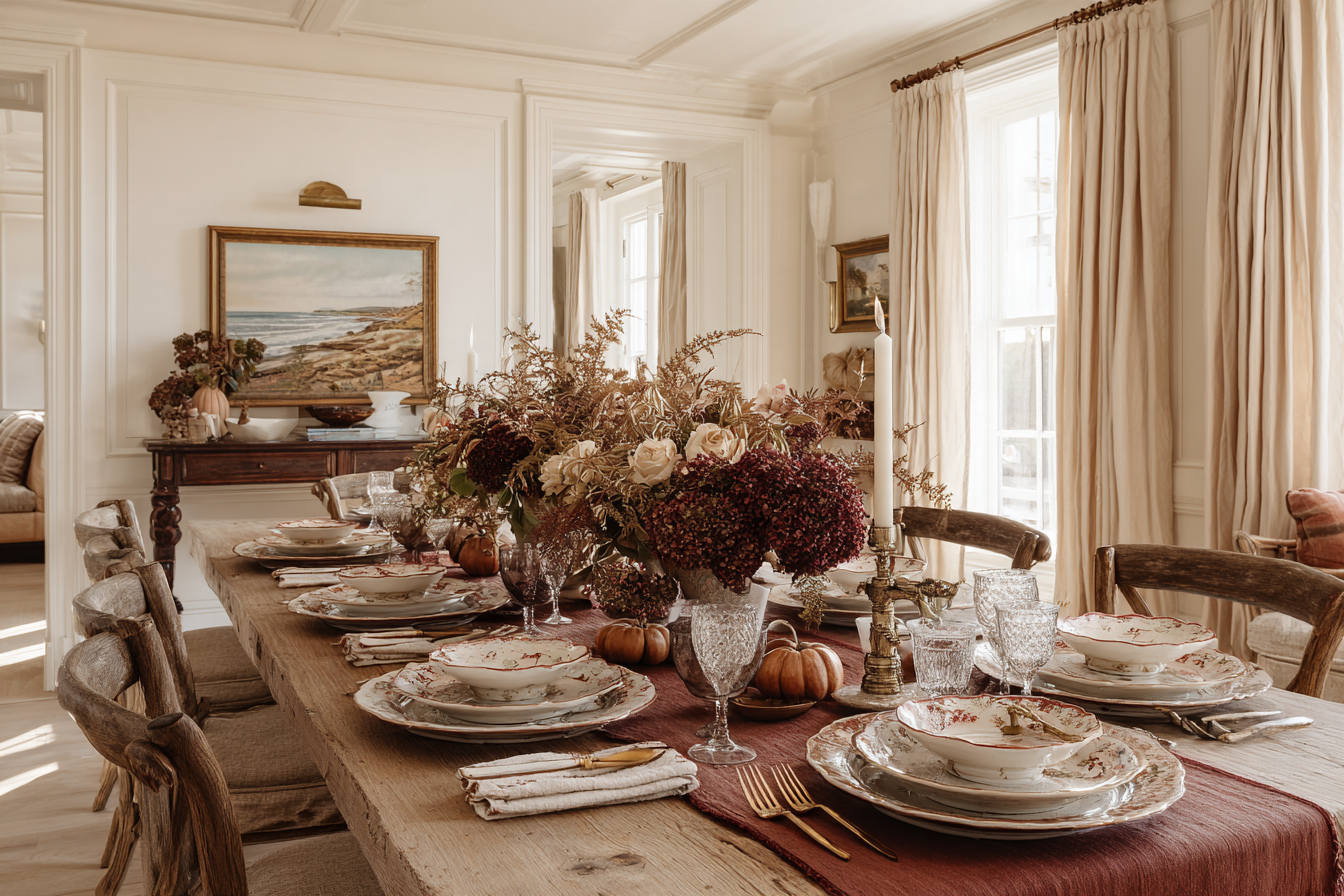
In November, New England landscapes change from the fiery colors of early autumn to more muted, dark shades, often consisting of bare branches, faded flowers and leaves, dull evergreen foliage, and warm browns of leaves on the ground. Instead of filling a home with artificial and cliché seasonal arrangements, bring these elements indoors.
02 ———–
Create a Welcoming Arrival, From Porch to Entryway
Thanksgiving, especially the guest experience, should begin before the dining table. The experience of arriving at a home – walking toward the front door through planted gardens, stepping onto the porch, and entering the foyer – establishes the anticipation for everything that will follow.
New England coastal homes typically handle this transition via covered porches, as they, together with exterior home materials and traditional architectural elements, create a sense of warm welcome.
However, Thanksgiving provides an opportunity to enhance these features. All additional elements must complement the home, and objects like vintage planters filled with late-season greenery, branches, and seasonal produce can introduce natural texture. A traditional lantern beside the door can add warmth, while a wreath made from natural flowers and leaves can feel appropriate without overwhelming the entrance. If pumpkins are involved in the decoration, allow them to remain as supporting elements – several pumpkins will bring out a festive atmosphere, while creating a large arrangement might distract guests from the overall architecture of a home.
Inside, continue the same visual language. An entryway console can provide a place for a shaded lamp, a ceramic vase full of dried flowers, and a few decorative seasonal objects. A woven basket can serve as storage for scarves or accessories, while a mirror above it will reflect light and make the entrance visually larger.
The important lesson here is continuity – when the exterior and interior share similar materials, colors, and decorative language, the transition feels intentional.
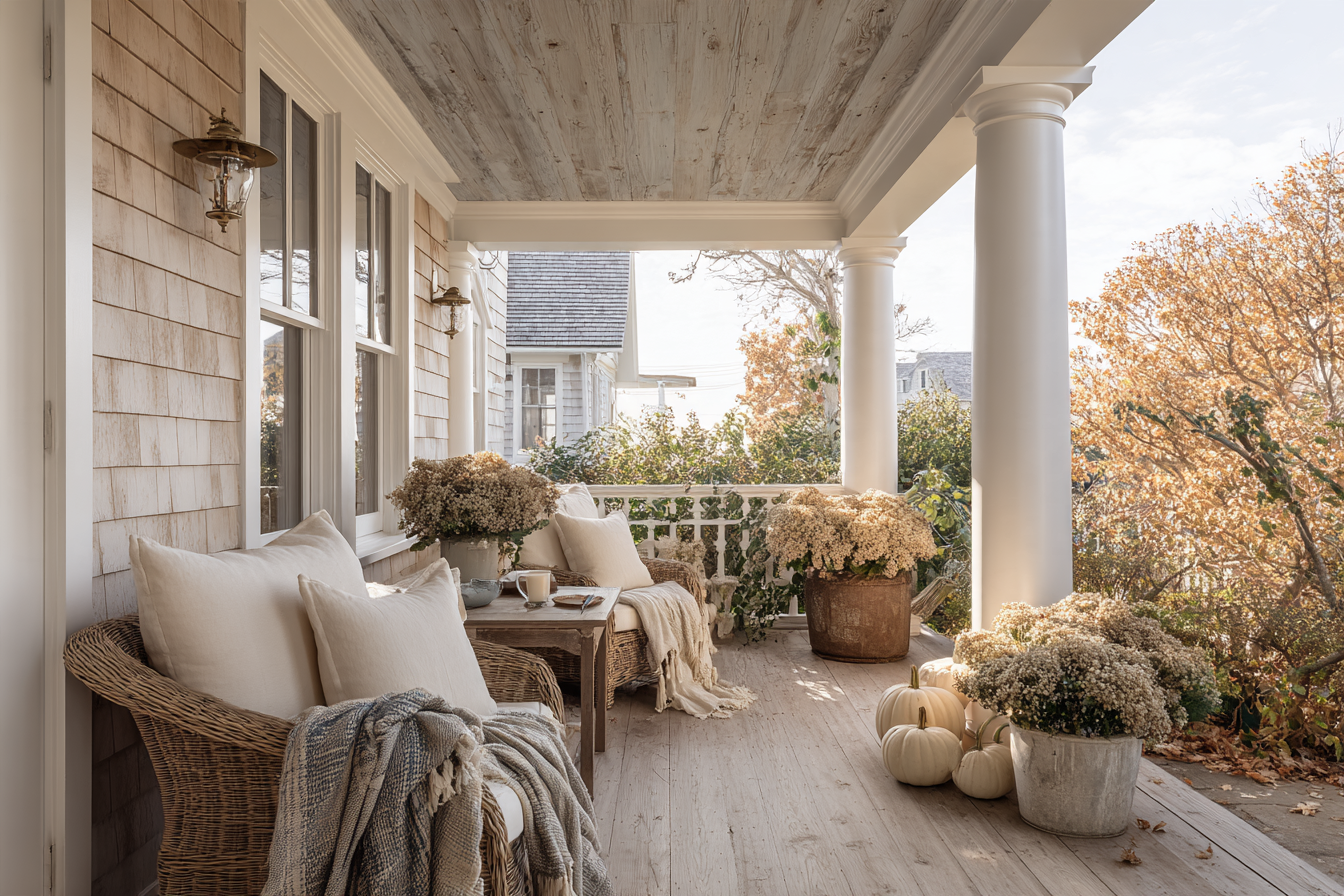
New England coastal homes typically handle this transition via covered porches, as they, together with exterior home materials and traditional architectural elements, create a sense of warm welcome.
03 ———–
Let Weathered Materials Do the Decorating
What defines New England coastal design the most is how it relies on natural materials that become more beautiful with age to establish its character.
Natural wood, natural stone, handmade ceramics, woven textiles, and patinated metals carry a natural visual sense of warmth. Their surfaces reveal subtle variations in color and texture, giving a room depth without requiring elaborate decoration. These properties are especially important during Thanksgiving, a holiday that is associated with warmth and gathering, hence, it is important to withstand the temptation of buying seasonal accessories and forgetting what is already there.
Picture two scenarios: a dining table fully covered with a tablecloth and decorative objects, and a well-loved and used wooden table that remained partially visible under the holiday tablescape. The grain, color variation, and gentle wear of the wood already contribute warmth to the room, while a simple linen runner, a few candles, and an arrangement of seasonal fruit may be all that is needed to elevate it. Elaborate decorative objects will only overwhelm the table without adding any real value to it.
From an interior design perspective, this approach works because weathered materials create contrast through their physical properties, and on a psychological level, people always associate weathered materials with warmth and comfort. This is not to say that every object needs to be old and well-used, as a mix of old and new will have the same effect, as the relationship between the materials matters more than their age.
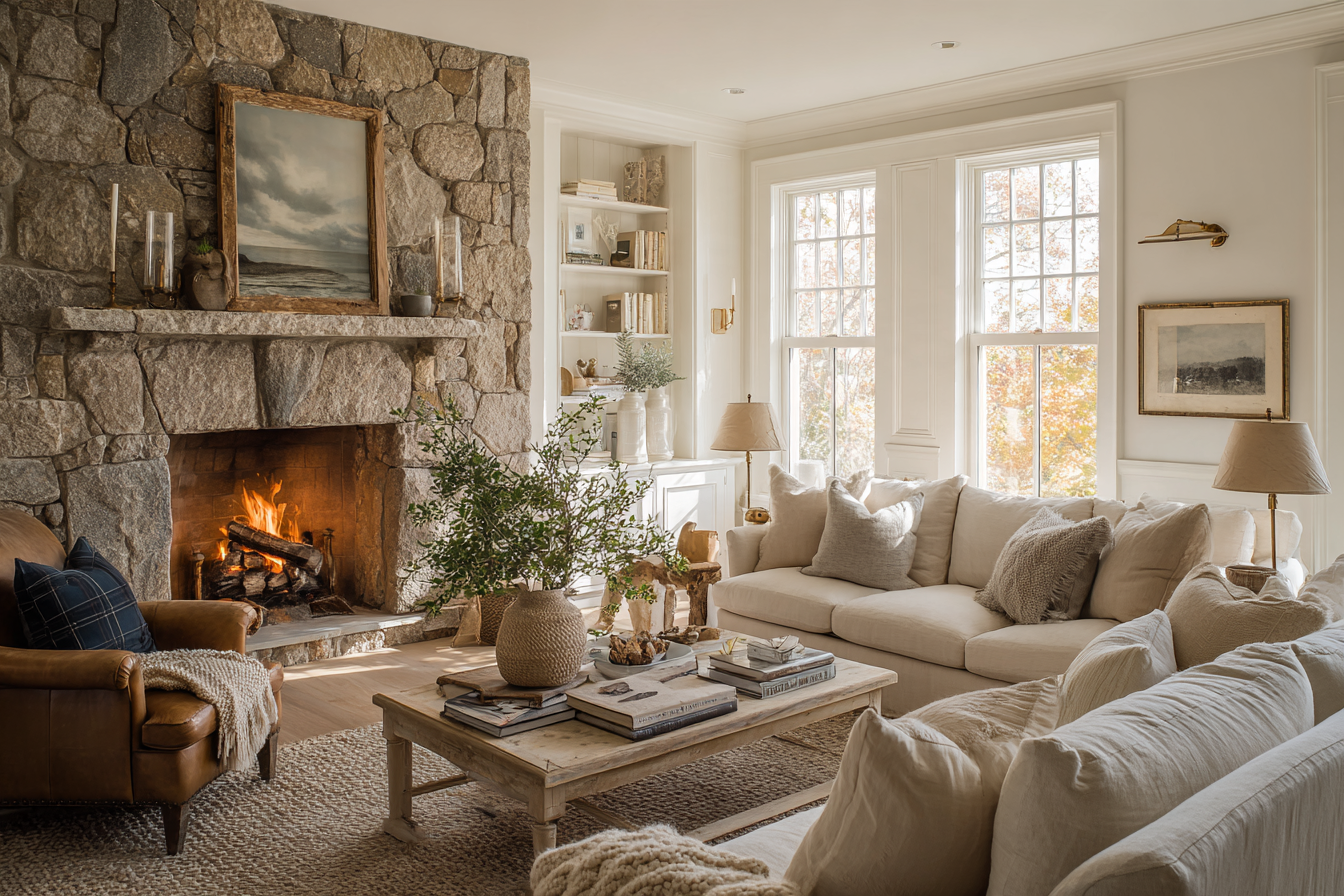
Natural wood, natural stone, handmade ceramics, woven textiles, and patinated metals carry a natural visual sense of warmth. Their surfaces reveal subtle variations in color and texture, giving a room depth without requiring elaborate decoration.
04 ———–
Dress the Thanksgiving Table in Linen, Not Holiday Prints
Very few elements have as much influence on the appearance of a Thanksgiving dining room table as the linens.
Tablecloths, runners, placemats, and napkins establish the visual foundation for the place setting. They are frequently treated as an opportunity to introduce seasonal patterns, and while pumpkins, leaves, and decorative lettering may announce the holiday, they may also make a table feel overly seasonal and tacky. For a more timeless, elegant, and coastal feel, consider using linen, cotton, and other natural fibers that would do the decorating with texture and colors, not patterns.
Natural fibers have an irregularity that makes them particularly beautiful beside weathered materials, ceramic dinnerware, and aged metals. Their slightly relaxed texture softens formal place settings, allowing an elegant and formally set table to feel homey. Texture layering can be introduced by mixing tablecloths, runners, napkins, and placemats of different materials and colors. As with everything discussed, no perfect matching is required, as excessive material and color matching makes a space feel overly coordinated.
The weight and drape of the fabric also matter. Heavier fabrics are especially appropriate for autumn because they create softer folds and a more substantial appearance than lightweight summer textiles. However, the table should still retain a sense of ease rather than becoming overly formal.
Consider the relationship between the linens and the objects placed on them. A matte linen surface provides a beautiful contrast to polished metals, clear glassware, and glazed ceramics. The simplicity of the fabric allows these materials to become more noticeable.
Neutral linens made of natural materials are also an investment in longevity. Unlike holiday-specific textiles, a well-chosen tablecloth or set of napkins can be used throughout the year, adapting to different seasons through changes in flowers, dinnerware, and lighting.
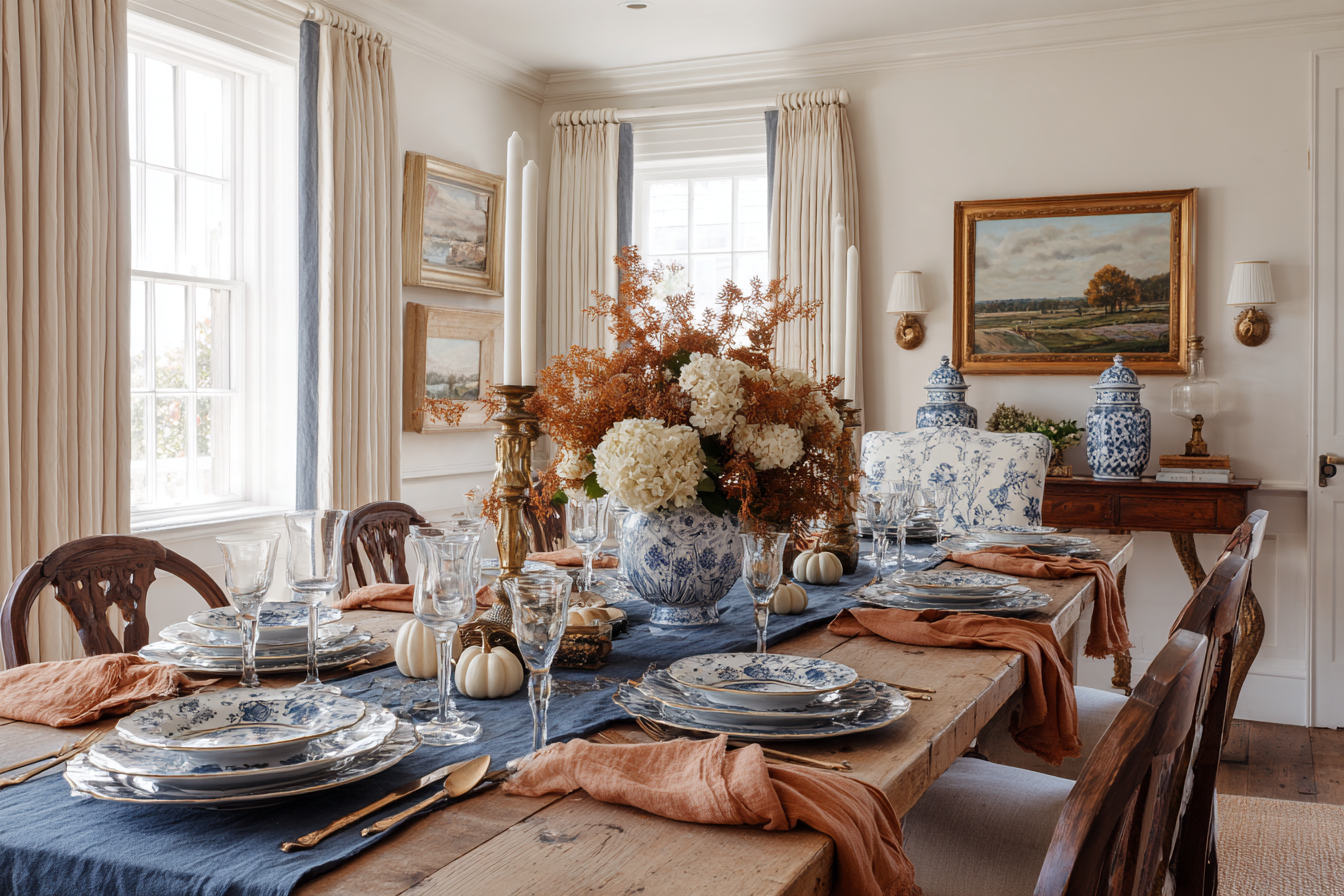
Tablecloths, runners, placemats, and napkins establish the visual foundation for the place setting. They are frequently treated as an opportunity to introduce seasonal patterns, and while pumpkins, leaves, and decorative lettering may announce the holiday, they may also make a table feel overly seasonal and tacky. For a more timeless, elegant, and coastal feel, consider using linen, cotton, and other natural fibers that would do the decorating with texture and colors, not patterns.
05 ———–
Create Contrast Through Texture, Not Excess
A thoughtfully layered Thanksgiving interior is not one filled with a lot of objects but one whose richness comes from combining a relatively small number of objects with different textures and finishes, creating a visual contrast.
Imagine a Thanksgiving table with a soft linen runner, smooth ceramic plates, patinated silver flatware, delicate glassware, and an aged wooden centerpiece – each material has a distinct surface quality, and those differences make the arrangement feel intentional, layered, and inviting. The linen is matte and irregular, the silver catches the light, the ceramics provide a smooth surface, and the wood introduces warmth and grain. None of these elements needs to be especially decorative because the relationships between them create visual contrast.
The same approach can extend beyond the dining table and to entire rooms. Darker materials generally appear more substantial, while lighter fabrics and open woven textures tend to be less visually heavy. A successful New England coastal interior balances both.
Texture should support the architecture rather than compete with it. When a room already contains heavy millwork, patterned wallpaper, or richly grained wood, additional decorative layers should be introduced with care and not overpower what is already in place. A well-balanced composition needs areas of visual interest and areas where the eye can rest.
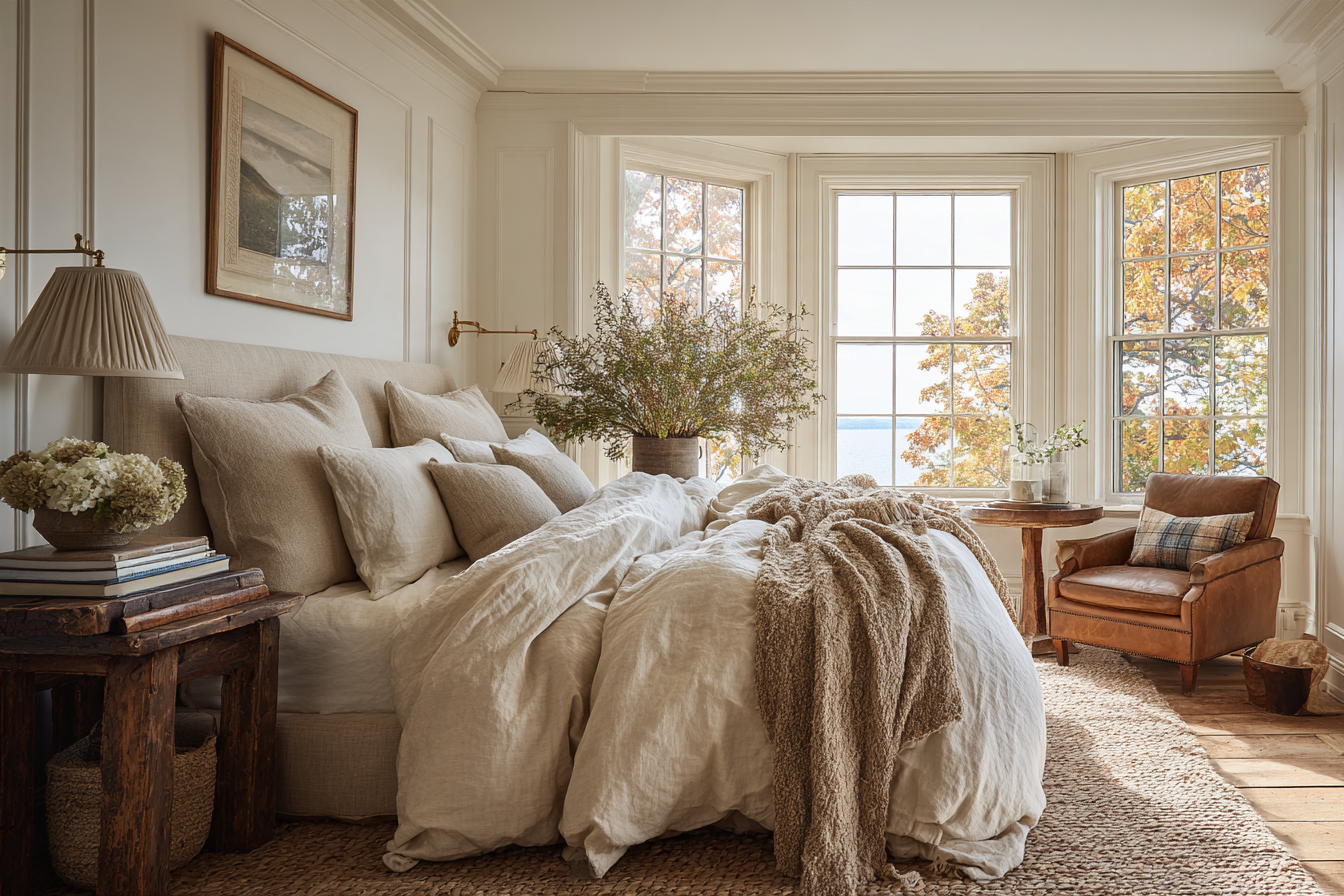
Darker materials generally appear more substantial, while lighter fabrics and open woven textures tend to be less visually heavy.
06 ———–
Set the Mood With Lamps Before Guests Arrive
Thanksgiving decorating often focuses on the decorative objects that guests will see, but the way a home is illuminated can have an even greater influence on how it feels.
By late November, daylight disappears earlier – this change makes layered lighting one of the most effective ways to create a warm, inviting Thanksgiving atmosphere indoors. Instead of relying entirely on overhead fixtures, introduce smaller sources of light throughout the spaces guests will use.
For example, a shaded table lamp on an entry console can establish a welcoming first impression. In the living room, lamps beside armchairs and sofas can create intimate pools of illumination that encourage conversation. In the dining room, the chandelier or pendant should remain connected to the table, but it does not have to provide all the illumination, as wall sconces or a lamp on the sideboard can soften the surrounding space, preventing the room from feeling overly bright or dramatically dark. Candles can add another layer, especially on a dining table or mantel, but they should be positioned safely and kept clear of combustible materials.
Warm-white lighting, around 2700K, generally creates a comfortable atmosphere in homes. Dimmers are valuable because they allow the room to transition from the practical brightness needed for preparing and serving dinner to softer illumination later in the evening.
The main goal is to make the lighting become part of the architecture, not a holiday accessory. Sometimes the most effective decorating change is not adding another object, but switching on a lamp that has been overlooked.
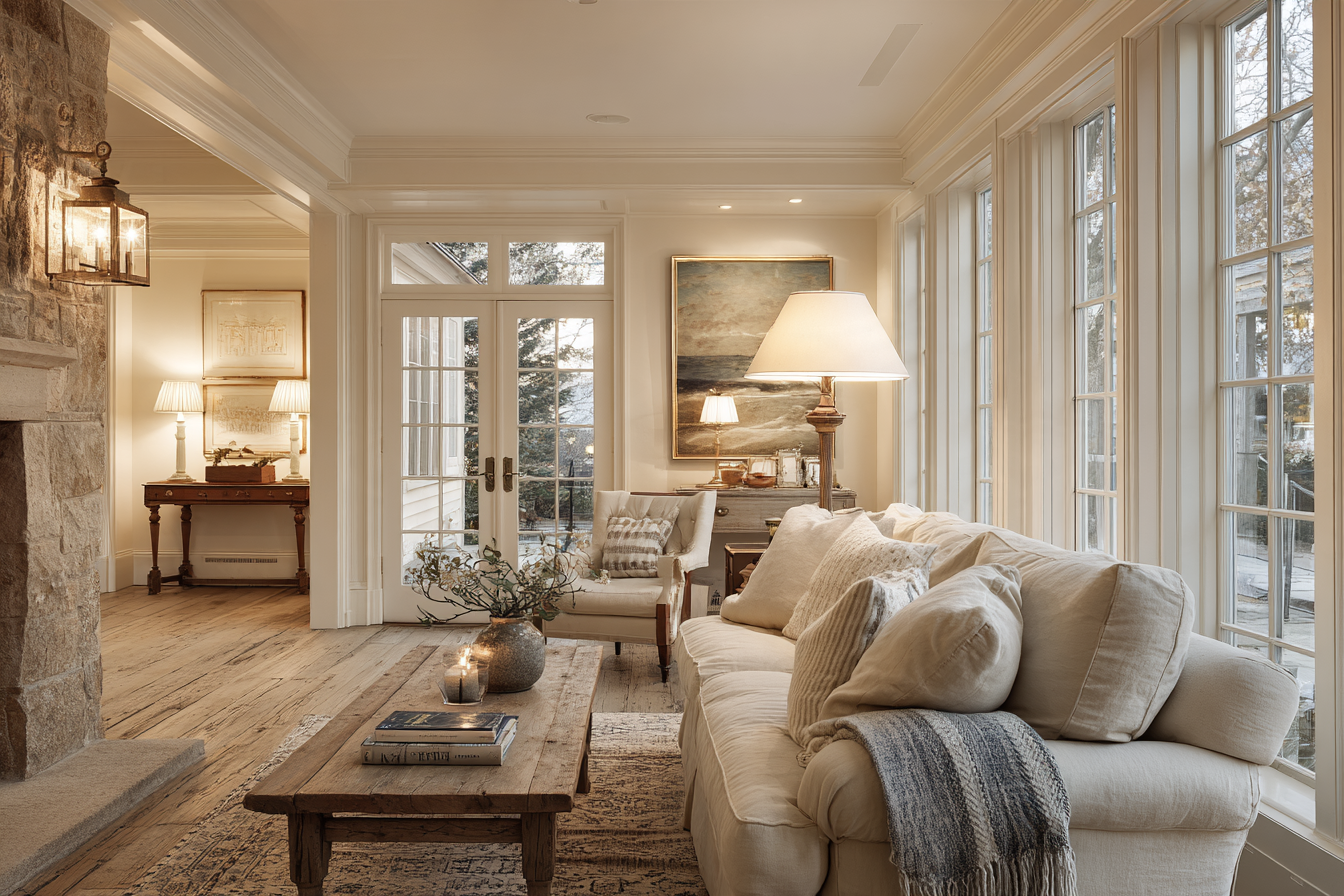
By late November, daylight disappears earlier – this change makes layered lighting one of the most effective ways to create a warm, inviting Thanksgiving atmosphere indoors. Instead of relying entirely on overhead fixtures, introduce smaller sources of light throughout the spaces guests will use.
07 ———–
Set a Thanksgiving Table That Looks Collected, Not Coordinated
A holiday tablescape that appears to be collected over generations instead of put together in one season is always more inviting and is a true representation of what Thanksgiving is about.
Perhaps the dinner plates belonged to a grandparent, the serving platter came from an antique shop, and the glasses were collected gradually over the years. The pieces may not match perfectly, but together they create a setting that feels elegant, personal, and full of character and history.
Rather than purchasing a coordinated set of seasonal dinnerware, begin with what you already own. If you enjoy collecting vintage dinnerware, look for pieces that share a common visual thread – they might have similar colors, patterns, or related shapes, even if they come from different manufacturers or periods. Consistency doesn’t require everything to match; it requires enough repetition that the arrangement feels intentional. The same applies to glassware and flatware. Vintage glasses can sit comfortably beside contemporary pieces, while antique silver adds character to simple white plates.
Think about how the table will function once dinner begins. Centerpieces should remain low enough for guests to see one another, and there should be enough room on the table for serving dishes, glasses, and comfortable place settings. A table that is beautiful but difficult to use has lost sight of the purpose of gathering.
That balance between elegance, history, the present day, and ease is what makes a collected holiday table so appealing.
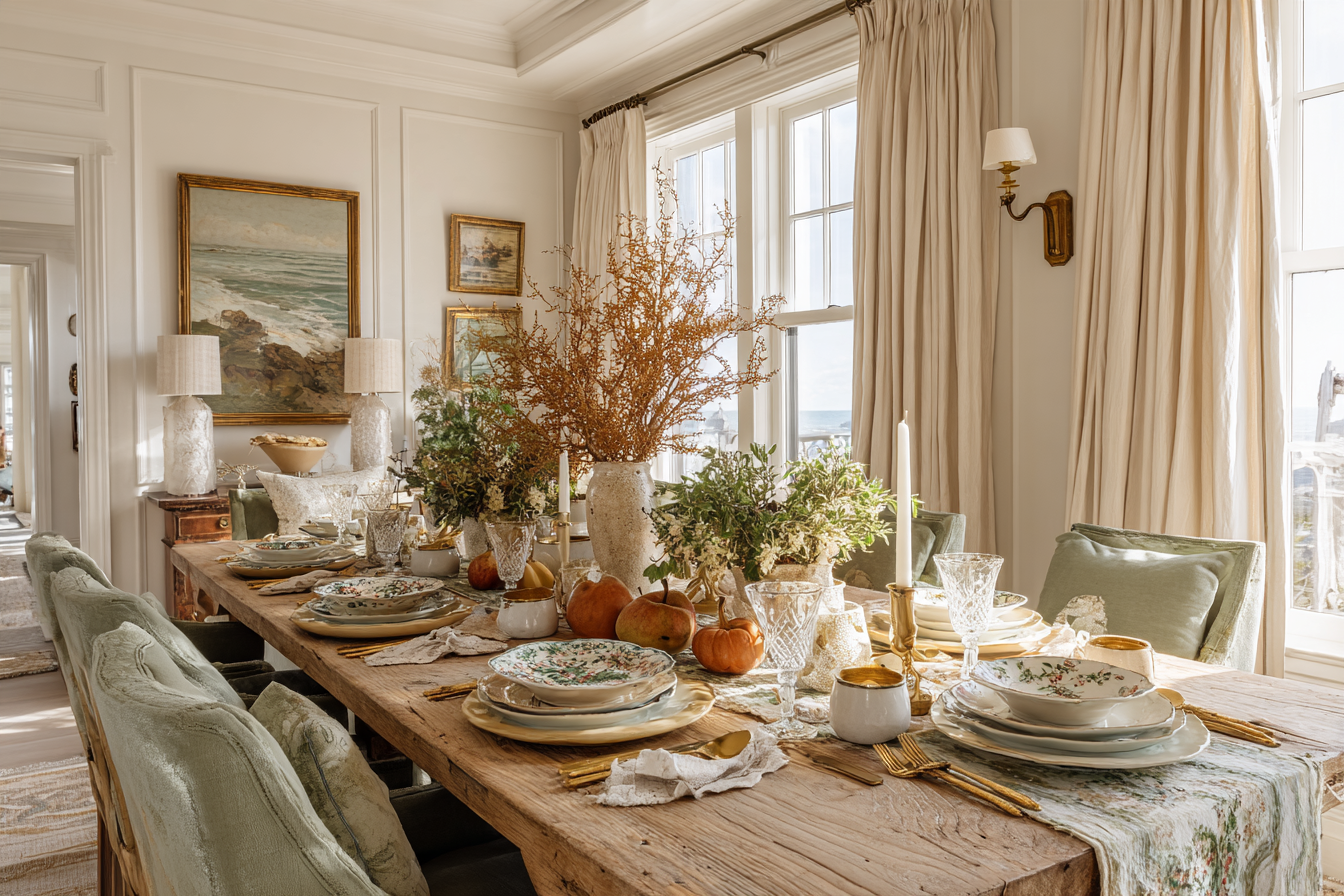
Think about how the table will function once dinner begins. Centerpieces should remain low enough for guests to see one another, and there should be enough room on the table for serving dishes, glasses, and comfortable place settings. A table that is beautiful but difficult to use has lost sight of the purpose of gathering.
08 ———–
Decorate With Family History
Thanksgiving is the perfect occasion to bring out family heirlooms, as the holiday itself is centered around family, gratitude, memories, history, and comfort – an inherited serving platter, an old wooden dining table, a collection of family photographs, or a set of brass candlesticks can contribute far more to the atmosphere of a room than newly purchased seasonal accessories. Collected objects have a quality that cannot be manufactured – they connect the present gathering to those that came before it.
Most importantly, for Thanksgiving, consider bringing these pieces into active use rather than treating them as objects to be preserved behind closed doors. For example, an antique silver tray can hold glasses or small serving dishes, a family tablecloth might be layered with contemporary dinnerware, photographs can be displayed on a sideboard, and inherited pottery or candlesticks can become part of the table arrangement.
Not every meaningful object needs to be an heirloom. Pieces found at estate sales, flea markets, and antique shops can also introduce character, especially when they reflect the architectural or regional history of the home. The most important part is that these objects should be chosen for their meaning, usefulness, or beauty rather than simply because they appear old, and they should be given room to breathe.
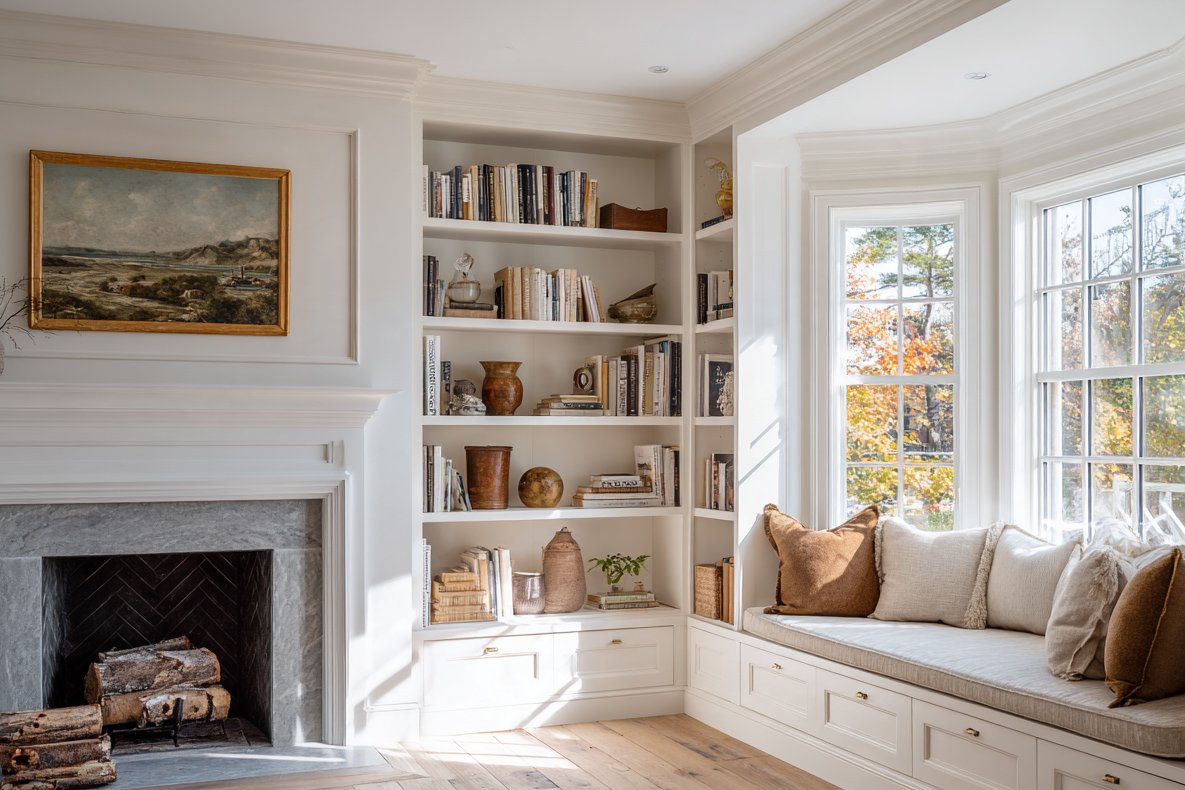
Not every meaningful object needs to be an heirloom. Pieces found at estate sales, flea markets, and antique shops can also introduce character, especially when they reflect the architectural or regional history of the home.
09 ———–
Let Scent Become the Invisible Layer of Decorating
Scent is one of the most powerful sensory associations with home, especially during Thanksgiving. The smell of something baking, fresh herbs on the kitchen counter, or a meal slowly coming together can make a house feel welcoming before guests have entered the dining room, yet scent is rarely considered part of the decorating process.
In a New England coastal home, where the design philosophy emphasizes natural materials and simple details, fragrance is most effective when it feels equally simple and subtle. Rather than filling the house with multiple heavily scented candles or seasonal fragrances, allow the activities of Thanksgiving to contribute to the holiday scent. For example, herbs used in cooking can provide a subtle fragrance while also serving a practical purpose, citrus arranged in a bowl brings color and a light natural aroma, and fresh greenery may introduce another gentle sensory layer.
If you choose to use scented candles or diffusers, keep in mind that strong fragrances near the dining table can compete with the aroma of food, and multiple different scents throughout the home can become overwhelming. Guests may also have sensitivities to artificial fragrance, making subtlety especially important.
From a design perspective, this is an extension of the same principle that guides lighting and acoustics – a successful interior considers how people experience the space through all their senses. A home should not only look inviting, but it should also feel comfortable, sound pleasant, and offer a sensory environment that supports the occasion.
——————
Architect’s Perspective: Why Timeless Thanksgiving Decorating Begins With Scaling Back
When decorating for Thanksgiving, it is easy to focus on individual objects: the centerpiece, the wreath, the table setting, or the arrangement on the mantel. But from an architectural perspective, the success of a seasonal interior depends on how those objects relate to the room as a whole. A beautiful arrangement can feel out of place if its scale overwhelms the furniture beneath it, and a room filled with seasonal accessories may lose the architectural character that made it appealing in the first place. This is why scaling back is so important.
Before adding Thanksgiving decorations, analyze the composition of each room – identify the architectural focal points, the materials that already introduce visual warmth, and the surfaces that would benefit from a small seasonal adjustment. The most common decorating mistake is assuming that every surface requires attention, while in reality, empty space is an essential part of a well-composed interior. It allows architectural details to remain visible and gives decorative objects greater significance.
The “scaling back” approach also encourages a more thoughtful relationship with consumption. Instead of purchasing a new collection of decorations every year, begin by rearranging and rediscovering what you already own. When something is genuinely missing, choose pieces that will remain beautiful and useful after the holiday has passed.
A coastal-inspired Thanksgiving interior should feel like an extension of the home, not a temporary layer placed over it.
——————
The Bottom Line: The Art of Thanksgiving, Beyond the Decorations
The signature beauty of a timeless New England coastal home lies in the fact that it does not require extensive holiday decorating to feel ready for a holiday, especially for Thanksgiving. It doesn’t depend on how many seasonal objects are introduced, but on how thoughtfully the existing character of the home is brought forward. And perhaps being thankful for what is already there – the home collected and built over generations, family heirlooms, and memorabilia – is already enough to make the home festive.
The most beautiful Thanksgiving homes are not the most decorated. They are the ones where the setting feels as meaningful, welcoming, and timeless as the traditions unfolding within it.