COASTAL DESIGN SCHOOL
The Art of the Seasonal Transition:
7 Things to Change in Your
New England Coastal-Inspired Home for Autumn
____________________
New England coastal homes don’t redecorate for autumn—they transition into it. With richer textures, subtle rearranging, and collected vintage pieces, a coastal interior can embrace the season without losing the signature character that defines it.
SEPTEMBER 30, 2026
BY: MARIA CEBAN


ON THIS PAGE:
Introduction
Change the Visual Weight of Textiles
Deepen the Coastal Palette – Don’t Replace It
Rework Artificial Lighting for Earlier Evenings
Bring the Changing Landscape Indoors
Rearrange the Room Around How It Will Be Used
Let the Porch and Entry Make the First Transition
Strengthen One Architectural Focal Point
Architect’s Perspective: What Not to Do When Decorating a Coastal Home for Fall
The Bottom Line: The Art of Changing Less
Once the seasons change, there is a tendency to believe that our homes need to change with them. As September arrives, summer decor and textiles get packed away, pumpkins are placed on every available surface, and every room is dressed in a new seasonal palette of orange, rust, and brown. By November, the palette changes again, and much of it disappears. However, this is not how the timeless New England coastal homes work.
In a New England coastal home, autumn does not serve as a seasonal decorating event, and instead it causes a gradual shift in the mood and space setup. Come September, no home should lose the lightness, warm whites, weathered blues, linen upholstery, old furniture, and woven textures that give it its signature coastal character only because the leaves begin to turn. Instead, what should change is the context in which these homes are set. This is the art of the seasonal transition: not redecorating a home for autumn, but allowing the home to respond to it.
Particularly for New England coastal interiors, the most sophisticated fall decor involves editing, rotating, and rearranging a space before buying anything new, and once something is truly missing, autumn is the perfect time to search through estate sales, antique shops, flea markets, and vintage stores for pieces that bring history rather than another layer of seasonal merchandise.
This edition of Salt & Still’s Coastal Design School looks at seven changes that can take a New England coastal home gracefully from late summer into autumn.
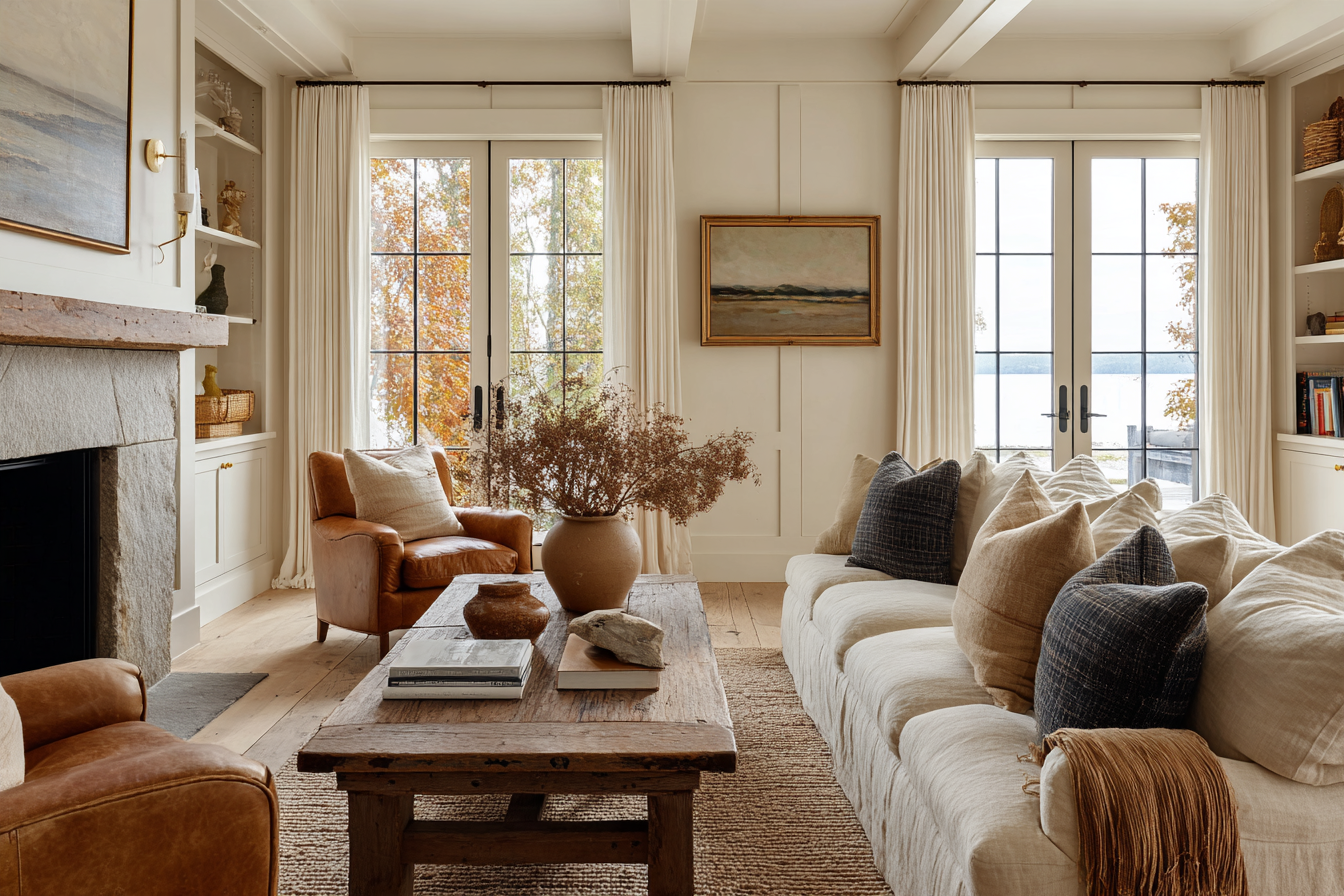
Come September, no home should lose the lightness, warm whites, weathered blues, linen upholstery, old furniture, and woven textures that give it its signature coastal character only because the leaves begin to turn. Instead, what should change is the context in which these homes are set.
01 ———–
Change the Visual Weight of Textiles
Changing the visual weight of the room before changing its color is one of the simplest ways to transform a coastal home for fall.
In the summer, interiors favor breathable and light materials, such as linen, lightweight cotton, sisal, and woven fabrics that move with the wind that enters a room through open windows and long hours of daylight. None of these materials have to disappear in autumn. Keeping these materials actually keeps a home coastal and prevents it from looking overly heavy.
To transform a home, begin layering textures and colors. A heavy wool throw may be situated across the arm of a light linen sofa. Pillows in washed linen and blue may remain on the sofa but should be joined by wool, velvet, or plaid ones. If a room has a natural-fiber rug, consider whether a vintage wool rug layered into a smaller seating area could introduce additional warmth. The goal of this process is not to transform every surface; it is to create visual contrast between the light and heavy materials.
Before purchasing anything, consider what you already own. Instead of new throw pillows, invest in pillow covers that can be rotated throughout the seasons. Throws stored away since spring, an old quilt, a wool blanket from another bedroom, or pillows that felt too dark during summer may suddenly make sense again. And if a purchase must be made, first turn to antique markets, estate sales, and online marketplace listings—typically, these places are filled with textiles that have character instead of screaming “fall décor” because autumn should be tactile, not themed.
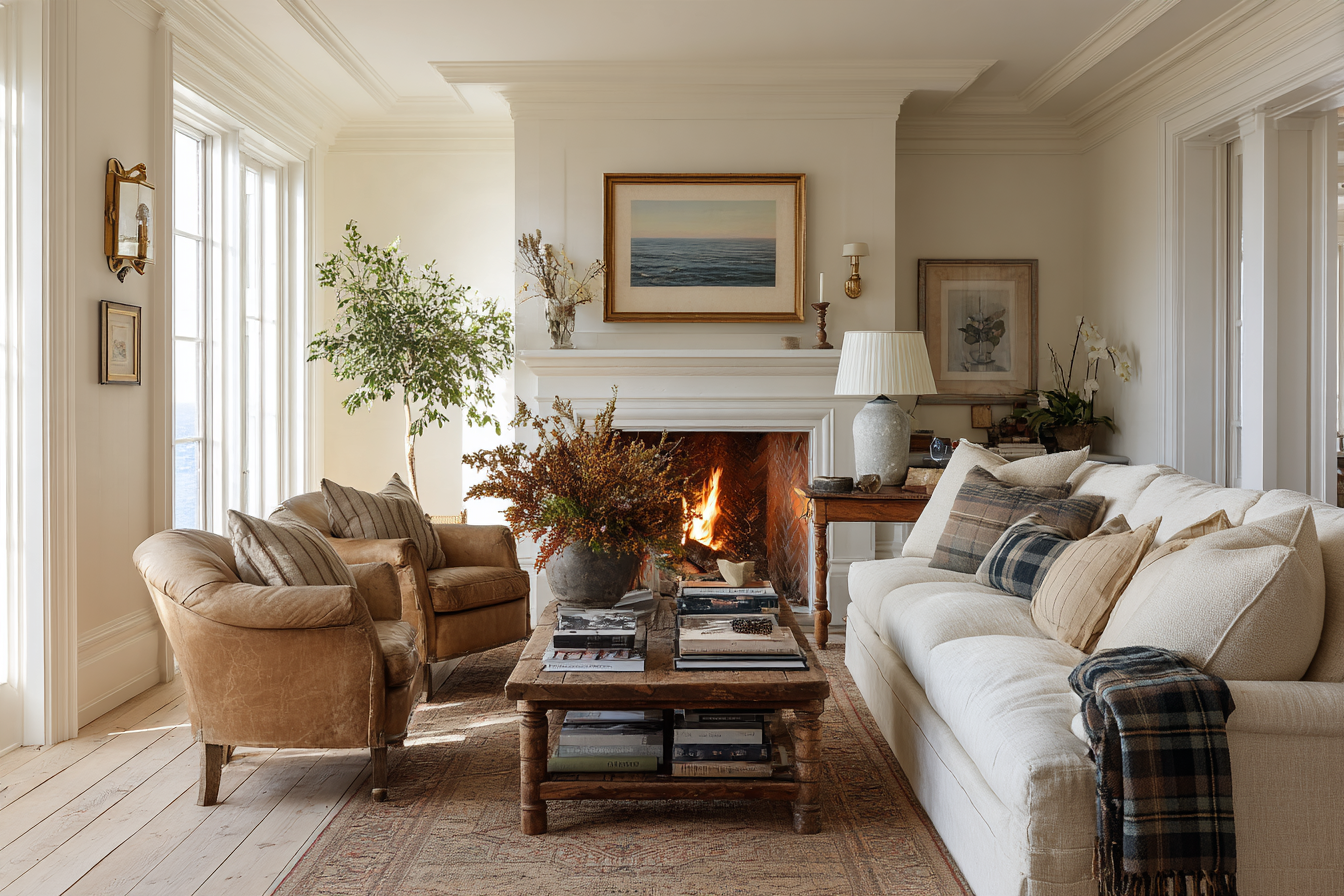
To transform a home, begin layering textures and colors. A heavy wool throw may be situated across the arm of a light linen sofa. The goal of this process is not to transform every surface; it is to create visual contrast between the light and heavy materials.
02 ———–
Deepen the Coastal Palette—Don’t Replace It
The timeless New England coastal color palette does not stop working when summer ends, and the soft blues, whites, and light natural tones should not be entirely replaced in the fall. The room can be made seasonal without losing its signature identity.
Treat autumn as an opportunity to deepen the color palette that is already present. Warm white may be joined by camel and brown. Weathered blue may be enriched by chocolate brown and tobacco. Sage may be accompanied by dark olive. Navy becomes sophisticated when joined by weathered wood and aged brass. Small touches of burgundy, rust, and oxblood can help to introduce the warmth without overwhelming the space. The contrast, along with the addition of new colors, makes the traditional coastal colors feel less summery.
Avoid introducing too many deep colors into one room, as the space may begin to feel overly heavy and lean more into the Ralph Lauren aesthetic than the New England coastal. Often, one to three notes are enough. An antique mahogany side table might provide the dark brown. An olive-patterned pillow and throw might provide the green. A burgundy book jacket or vintage textile may be all the red a room needs. The goal is to complement the fundamental coastal colors, not replace them.
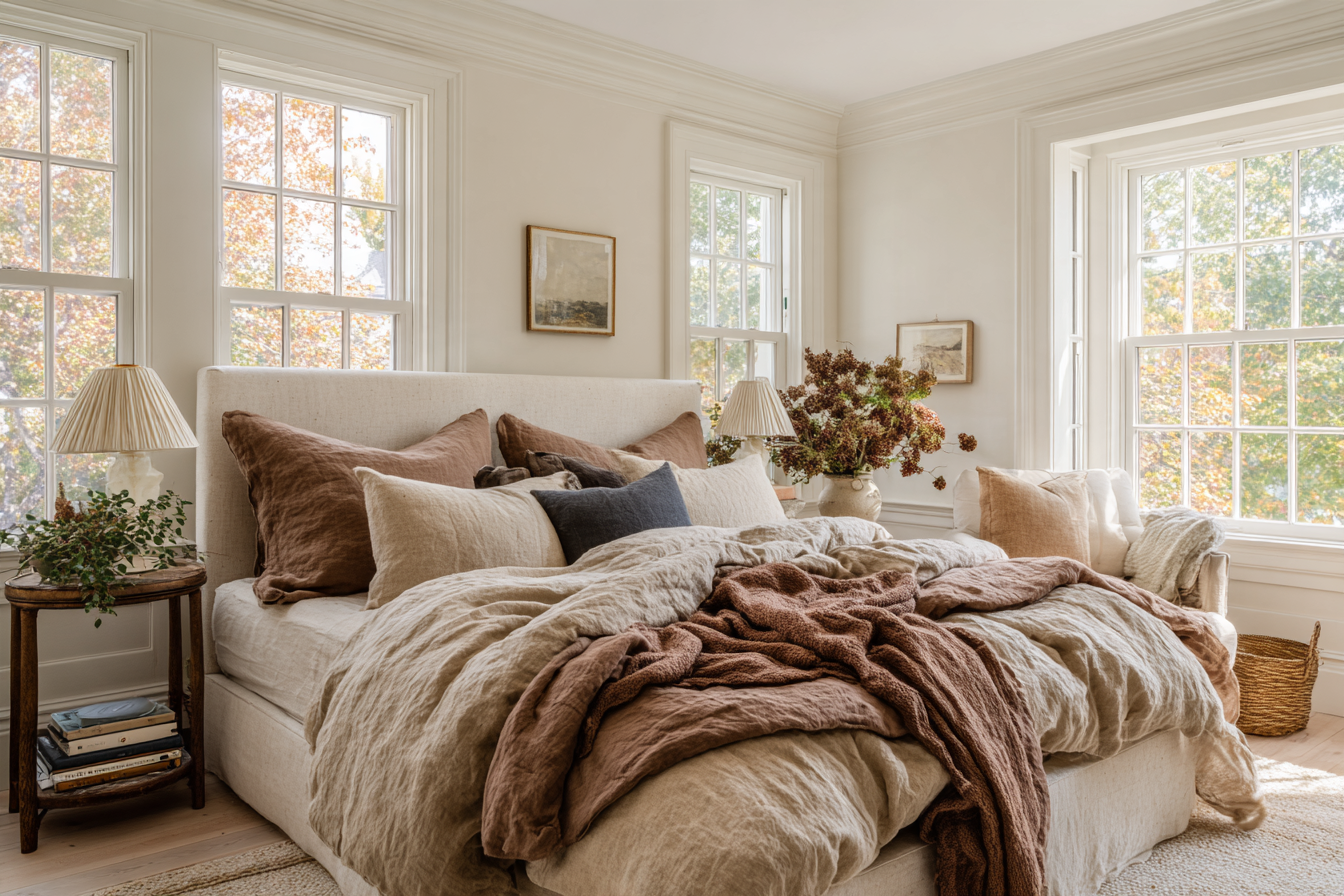
Treat autumn as an opportunity to deepen the color palette that is already present. The contrast, along with the addition of new colors, makes the traditional coastal colors feel less summery.
03 ———–
Rework Artificial Lighting for Earlier Evenings
In the summer, natural lighting does much of the work, as daylight hours stretch long into the evening hours. In autumn, artificial lighting gradually becomes part of architecture early in the evening, and a room that felt comfortable and well-lit in July may appear flat and uninviting if the only lighting option it has after sunset is a surface-mounted or recessed ceiling light.
To successfully develop a lighting strategy for your home, analyze every dark and over-lit space. Instead of mindlessly adding more light sources or dimming the existing ones, consider where you actually need warmth and which tasks are performed in which space.
Adding a table lamp beside a sofa or a reading chair may be more useful than adding another ceiling fixture. A shaded lamp on a console by the entry can make an entry hall feel more welcoming. Sconces above the fireplace mantel can bring attention to its architectural detail, while a small table lamp in the kitchen may softly illuminate the space once the task lighting is no longer required.
Similar to textiles, if you already own lamps, try moving them around before buying additional ones, as well as attempt replacing lightbulbs with ones of different lighting output. And if you do decide to go shopping, vintage shops, estate sales, and online marketplaces are excellent places for unique finds. A new shade and updated wiring, where necessary, can give an older lamp another life while bringing a sense of history into the room.
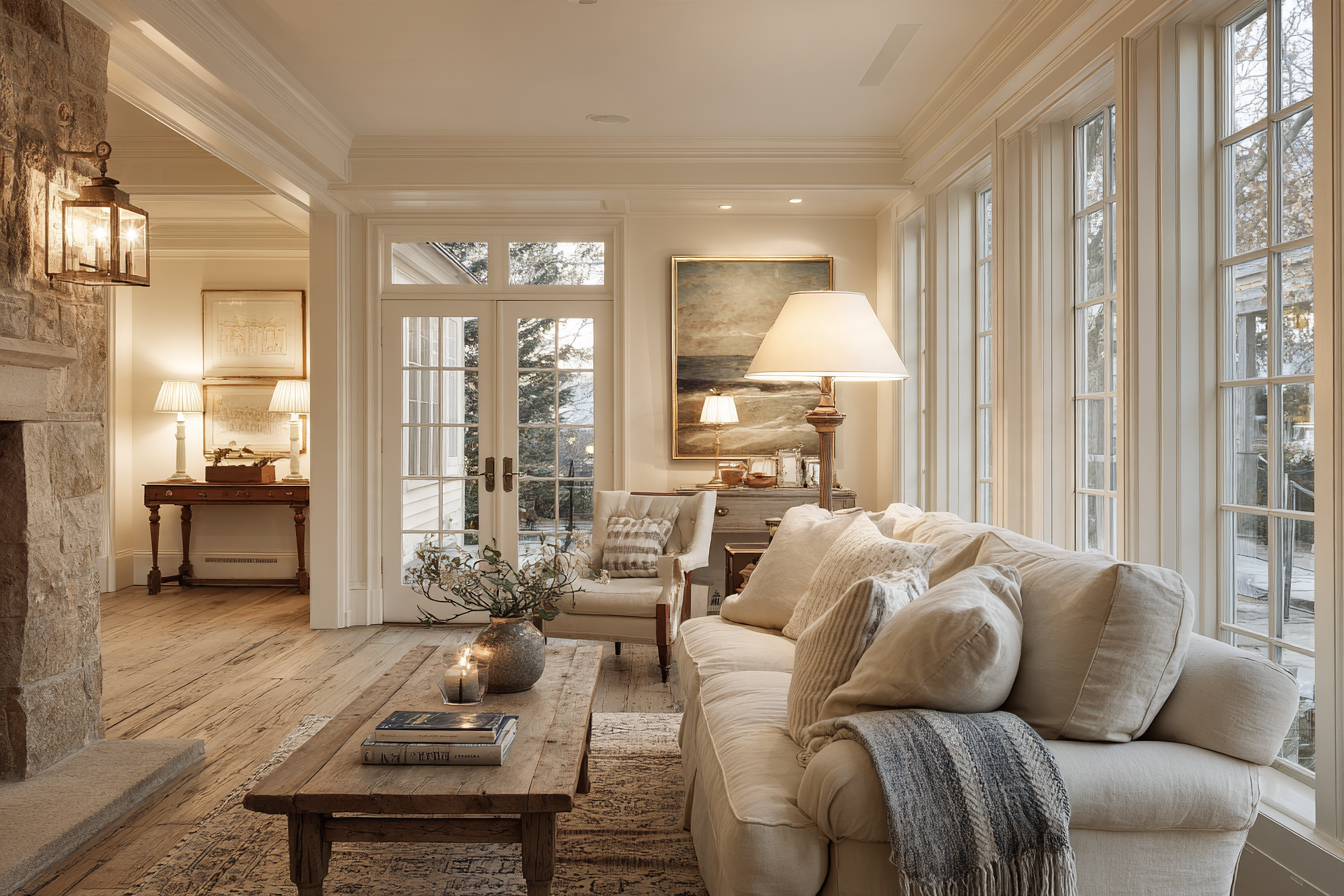
To successfully develop a lighting strategy for your home, analyze every dark and over-lit space. Instead of mindlessly adding more light sources or dimming the existing ones, consider where you actually need warmth and which tasks are performed in which space.
04 ———–
Bring the Changing Landscape Indoors
One of the best ways to bring fall into a New England coastal home is to bring the landscape inside. For example, fresh summer flowers don’t immediately have to be replaced by fall arrangements; instead, they can be left to fade into dusty greens, mauves, and parchment tones. Branches with changing leaves can fill porcelain vases. Seasonal fruit and vegetables can fill bowls on the kitchen table.
This approach works perfectly in a coastal home because it maintains the connection between the house and its surrounding landscape, which is the essential idea of a New England coastal design. Using natural objects as decor is also a sustainable and temporary approach that mimics the seasonal changes outdoors. Branches may be replaced as they dry, fruit and vegetables may be used for a delicious dinner and then replaced, and flowers will gradually fade into darker shades of brown. None of this decor requires a storage bin in December, also serving as a space-saving decor alternative.
Seasonal decorating is less about accumulating objects and more about observing what the season is already offering.
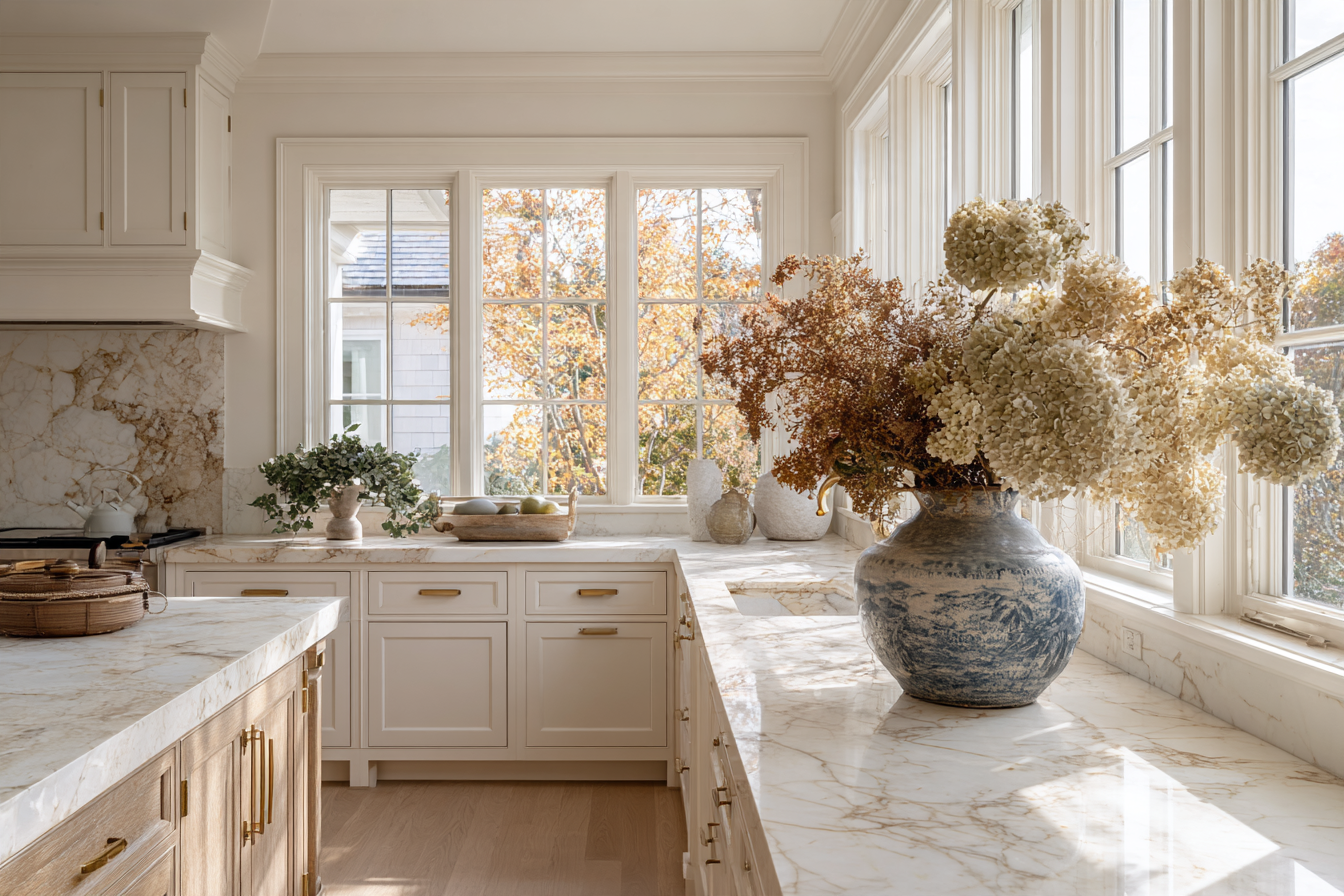
One of the best ways to bring fall into a New England coastal home is to bring the landscape inside. For example, fresh summer flowers don’t immediately have to be replaced by fall arrangements; instead, they can be left to fade into dusty greens, mauves, and parchment tones.
05 ———–
Rearrange the Room Around How It Will Be Used
Autumn is not about adding more objects to a home; however, it may inspire transformative changes in the form of moving around objects that are already there.
In the summer, furniture arrangements tend to naturally become more outward-facing. For example, chairs become more angled towards balcony doors to encourage evening conversations to continue out on the porch.
But as the days become shorter and temperatures fall, the heart of a home begins to move inward. If a room has a fireplace, the furniture arrangement responds to it. In a living room, a reading chair might move closer to the hearth, joined by a floor lamp and a plaid throw. The entire room becomes more intimate and inviting, inspiring a gathering. And naturally, the same strategy applies in rooms beyond the living room.
This strategy is not about designing an entirely new furniture layout every season. Instead, it is about recognizing that people use and inhabit a home differently as the seasons change. A timeless interior must be flexible enough to respond to these seasonal changes.
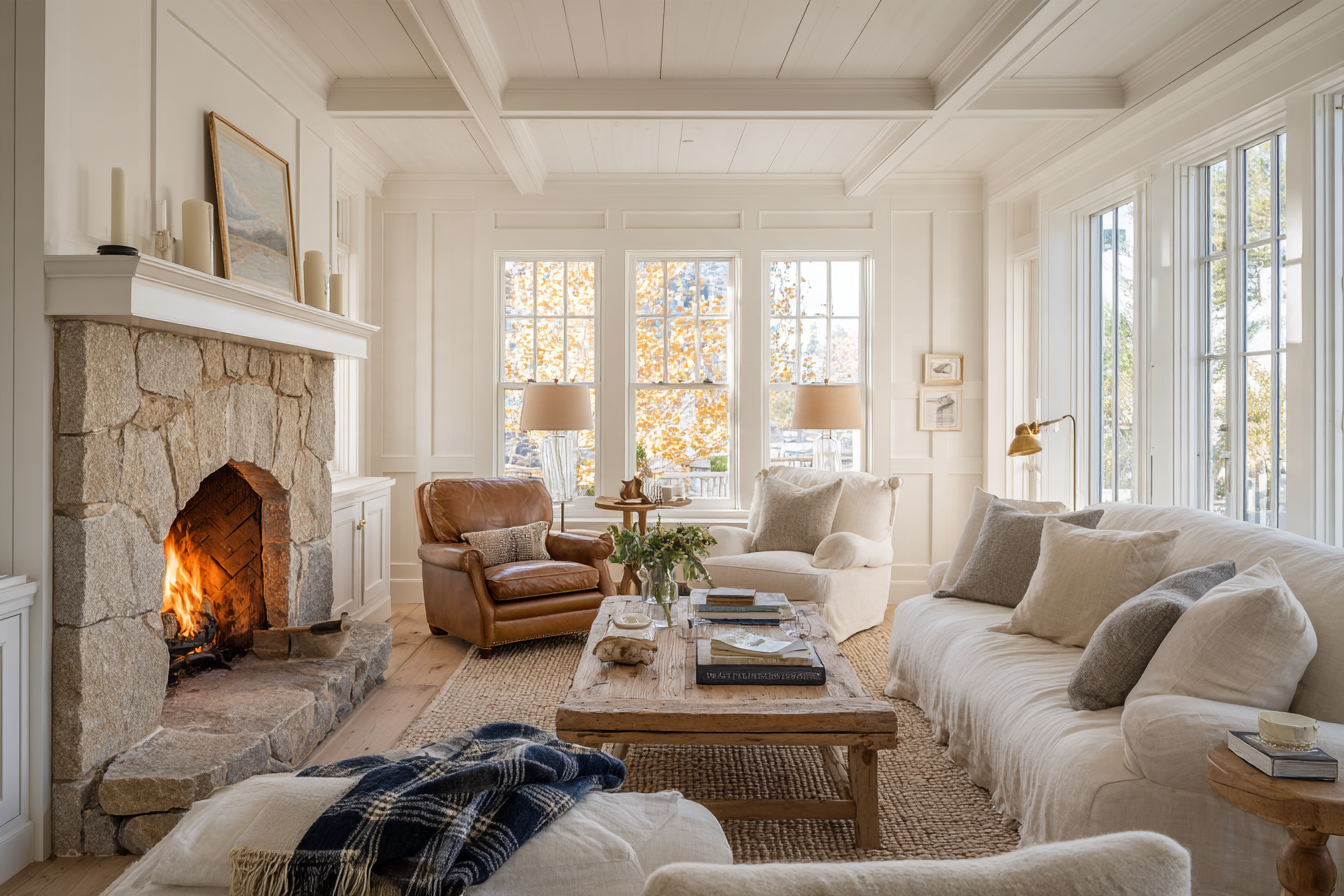
In the summer, furniture arrangements tend to naturally become more outward-facing. But as the days become shorter and temperatures fall, the heart of a home begins to move inward.
06 ———–
Let the Porch and Entry Make the First Transition
In a New England coastal home, the porch and mudroom play an important role in introducing seasons indoors.
In the summer, porches are traditionally filled with potted hydrangeas and foliage, rattan and natural wood conversation sets, and finished with lightweight curtains moving through open windows. Once autumn comes, this porch does not have to change entirely and become filled with a display of pumpkins, hay bales, signs, and other seasonal decor. For a New England coastal home, less is more.
The seasonal makeover should begin with removing distinctly summery objects: cushions, plants, various decor pieces. Introduce several pumpkins in various sizes in restrained colors, gathered asymmetrically near the steps or near the front door. Adding a simple wreath, solar-powered lanterns, an outdoor throw, seasonal cushion covers, and a heavy doormat may be enough to make a porch look seasonal yet not themed.
Autumn is also an excellent time to reconsider the function of the porch and mudroom. In the summer, a porch is mostly used for gatherings and for quiet mornings with a good book and a cup of coffee. In the fall, is there a place to store wet boots and umbrellas? Are they lit well enough to host a gathering when the sun sets early? Which functional elements could be added to make the two usable in cooler times of the year?
Most importantly, any decor elements and furniture arrangements must complement the architecture of the home and add to its visual richness, not compete with it.
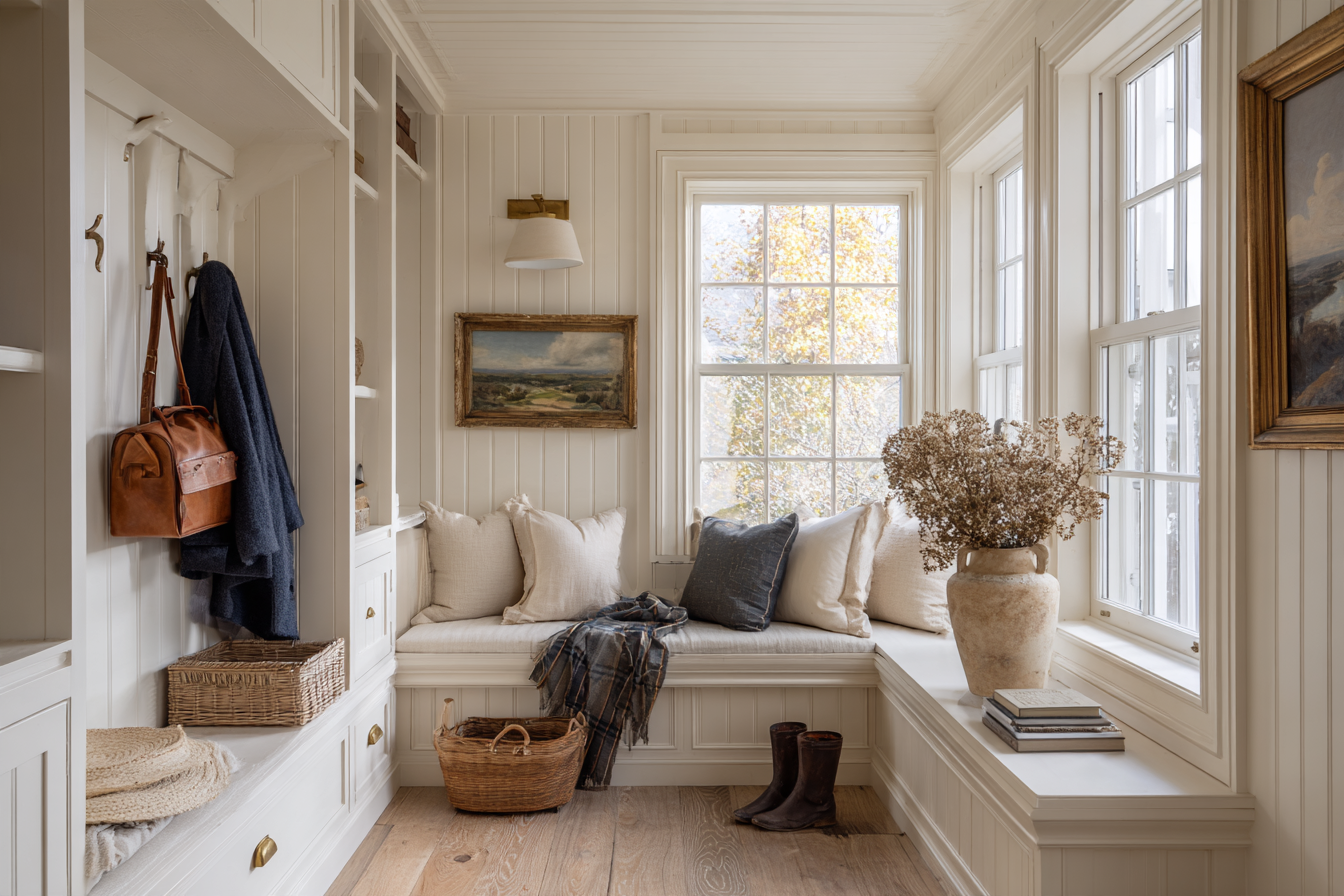
Autumn is also an excellent time to reconsider the function of the porch and mudroom. In the summer, a porch is mostly used for gatherings and for quiet mornings with a good book and a cup of coffee. In the fall, is there a place to store wet boots and umbrellas?
07 ———–
Strengthen One Architectural Focal Point
Every season, especially autumn, has a way of revealing a space that lacks architectural focus. As more time is naturally spent indoors and as artificial lighting replaces natural light, elements like fireplaces, built-ins, window seats, and millwork become more noticeable.
Instead of buying seasonal decor, consider investing in an architectural element that will make the room better throughout the entire year. For example, if a room has a fireplace, perhaps the mantel needs a makeover and not decorating. Similarly, an outdated and uninspiring surround may be brought back to life with a new coat of paint, tile, or stone, depending on the home’s architecture and personal budget.
Beyond substantial renovations, existing built-ins can be restyled with a new arrangement of books, pottery, art, and objects already owned. An entry can gain character through the addition of hooks, a vintage console, or millwork. Even adding a picture light above a painting can make an overlooked space feel intentional.
These improvements are not necessarily directed at autumn, and that is precisely the point, because the best seasonal changes make the homeowners notice what a home needs permanently. A timeless New England coastal home should feel as though it has been assembled gradually, and seasonal improvements are the best way to achieve a collected home.
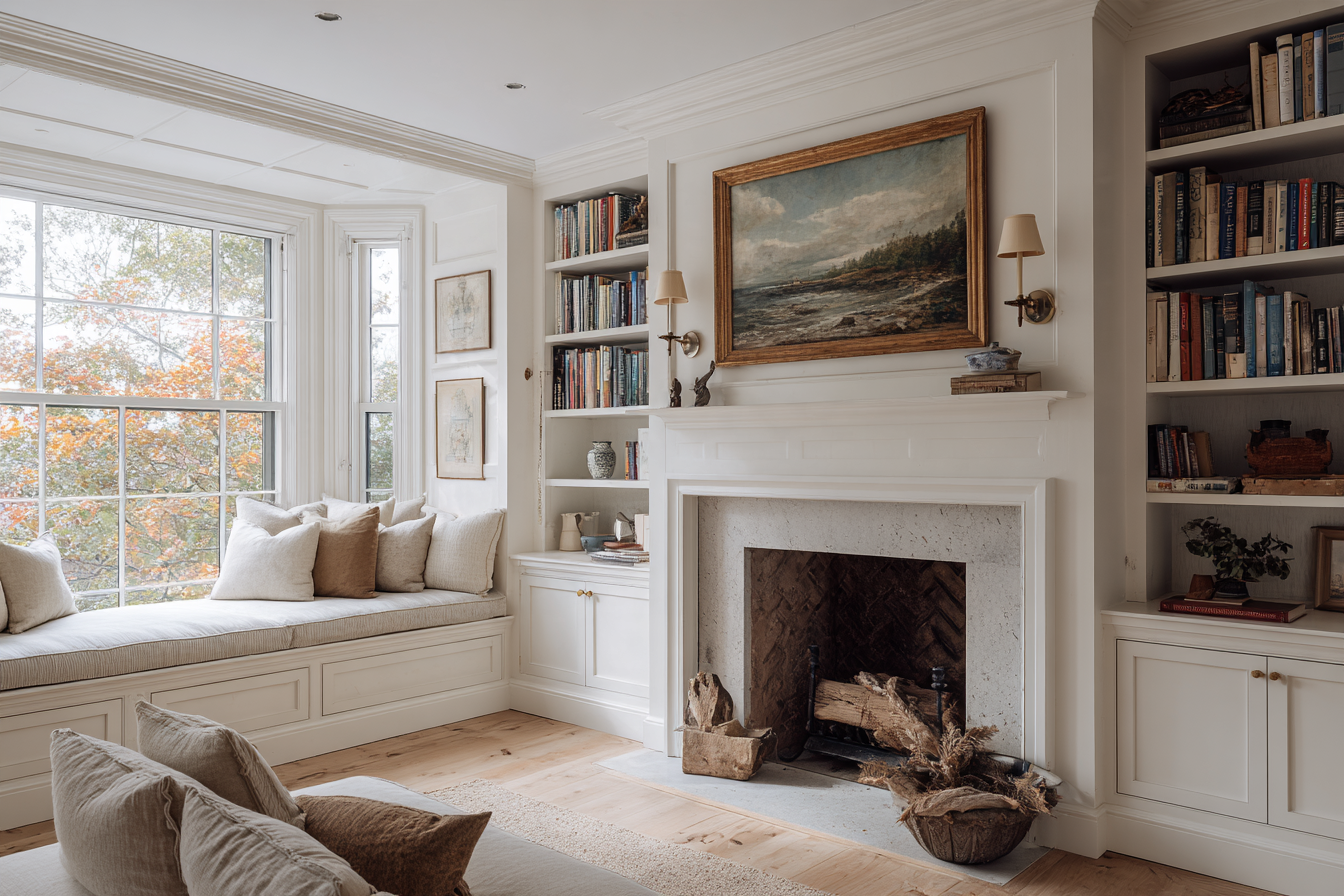
Instead of buying seasonal decor, consider investing in an architectural element that will make the room better throughout the entire year. Beyond substantial renovations, existing built-ins can be restyled with a new arrangement of books, pottery, art, and objects already owned.
08 ———–
Architect’s Perspective: What Not to Do When Decorating a
Coastal Home for Fall
As an architect, I believe that the easiest way to lose the signature character of a New England coastal home is to treat autumn as a decor theme.
Not every blue pillow should be replaced with a deep brown one, not every surface should be covered in pumpkins, and not every light material should be removed from a room and replaced with a heavier counterpart, because it is the lighter materials that give a New England coastal interior its look. Also, steer away from buying large amounts of inexpensive seasonal decor that will either last only a season or two, and will spend the majority of the year in storage.
Not every room should announce the season. Let one room have the plaid textiles, another room a branch with changing leaves. Allow the pumpkins to remain outdoors. Keep the signature blues, linen, and all elements that make your home… your home.
Autumn should be another layer of its story, not a temporary costume placed over it.
09 ———–
The Bottom Line: The Art of Changing Less
The most sophisticated and timeless approach to seasonal decorating is learning how little actually needs to change.
A New England coastal home already contains many of the things that make autumn feel comforting: natural wood, aged brass, woven textures, soft colors, layered lighting, comfortable furniture, porches, fireplaces, old objects, and a close relationship with the landscape. Fall simply asks homeowners to notice different parts of the home.
Bring wool blankets out of the closet, move a reading chair closer to the fireplace, switch on a table lamp a little earlier, and bring a branch in from the garden and set it in a vase. Keep the signature character of your home present, and let the autumn enchance it.
The goal of a successful seasonal transition should not be about making a home look like autumn. It should be about allowing a home to respond to autumn and to the way lifestyle naturally changes in this season.