STEAL THIS LOOK
Beyond The Trend: New England Coastal
Granddaughter Style Done Right
____________________
Coastal Granddaughter captured the feeling of New England coastal living, but not the whole story. Beyond the hydrangeas and blue-and-white palette lies a design tradition shaped by thoughtful architecture, natural materials, and homes meant to get better with time.
SEPTEMBER 7, 2026
BY: MARIA CEBAN


ON THIS PAGE:
Introduction
What the Coastal Granddaughter Trend Got Right
Architecture Behind the Aesthetic
What Most People Get Wrong About Coastal Granddaughter Style
The Interior Design Elements That Matter Most
Living Room: Comfortable, Layered, and Collected
Kitchen: The Heart of the Home
Bedroom: Relaxed Elegance
Porch and Mudroom: The Often-Overlooked Spaces
Exterior Elements That Complete the Timeless Look
Architect’s Perspective: Five Ways to Achieve Coastal Granddaughter Style Without Looking Trendy
The Bottom Line: What Lies Beyond the Trend
For the past several years, social media has been captivated by the Coastal Grandmother—and more recently, Coastal Granddaughter—aesthetic: blue hydrangeas, linen shirts, worn novels, breezy white interiors, Nancy Meyers kitchens, slow summer mornings spent reading on a sunlit porch.
It’s not hard to see why it caught on. The trend celebrated comfort, simplicity, and a genuine appreciation for home—qualities a lot of us are quietly craving in an increasingly busy world. That part of it was never the problem.
The problem is that the trend, in simplifying a design tradition that’s been evolving along the New England coastline for generations, also flattened it. The most beautiful New England coastal homes were never defined by a striped sweater, a stack of books, or a vase of hydrangeas. They are defined by thoughtful architecture, timeless materials, collected interiors, and a real connection to the surrounding landscape.
So the Coastal Grandmother and Coastal Granddaughter aesthetics aren’t wrong, exactly, but they’re incomplete. This edition of Salt & Still’s Steal This Look goes beyond the trend, to the design tradition underneath it.
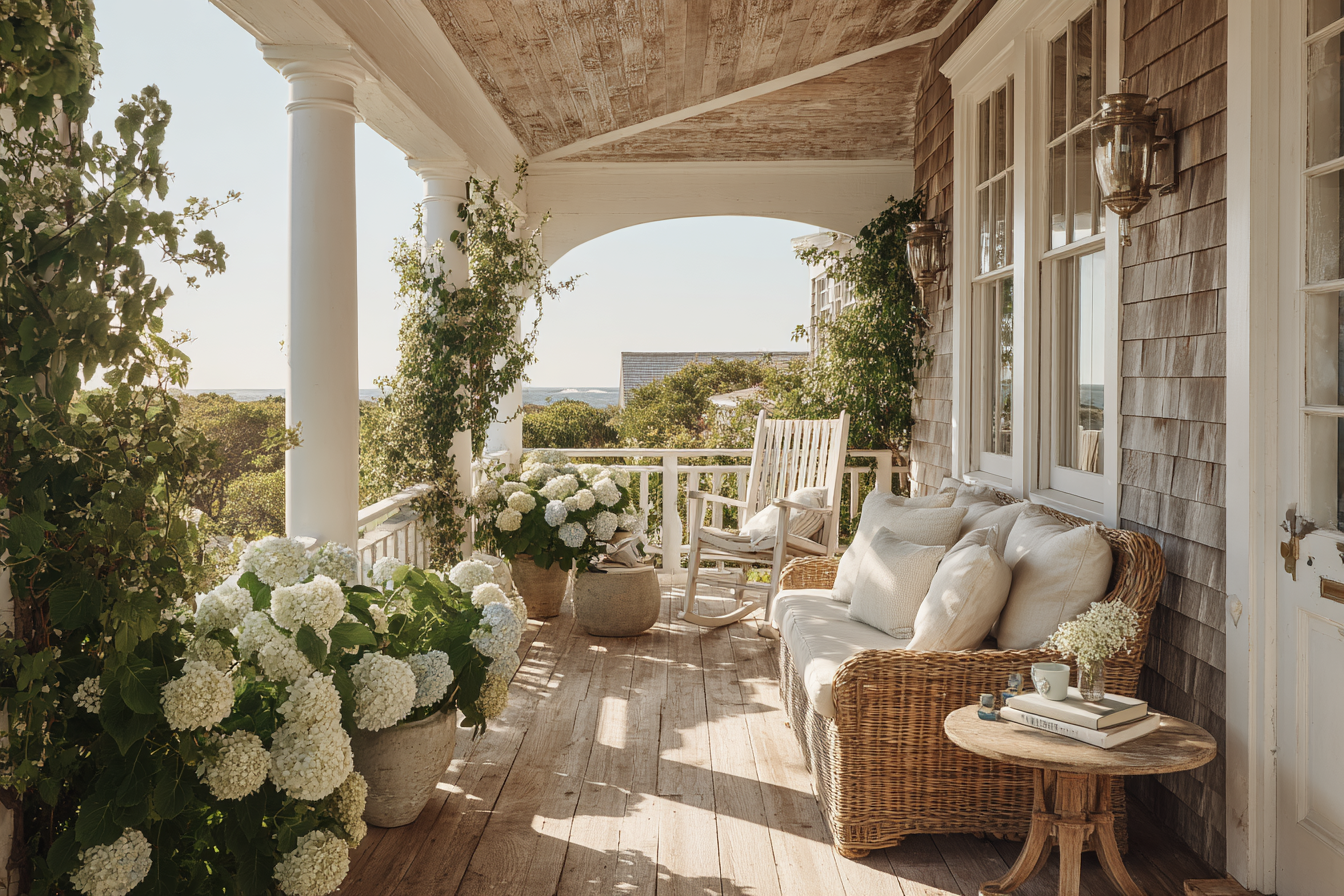
The trend celebrated comfort, simplicity, and a genuine appreciation for home—qualities a lot of us are quietly craving in an increasingly busy world.
01 ———–
What the Coastal Granddaughter Trend Got Right
Before getting into what the Coastal Granddaughter trend missed, it’s important to give credit where it’s due.
The Coastal Grandmother and Coastal Granddaughter aesthetic reintroduced a lot of people to principles that have quietly defined timeless New England coastal design for decades:
- Comfort over perfection.
- Natural materials.
- Fresh flowers and greenery.
- Soft blue and neutral color palettes.
- Layered interiors.
- A slower approach to living.
None of this was invented for social media. These ideas have been part of New England coastal homes for a long time. The real issue wasn’t the inspiration; it was the compression of the style as a whole. An entire design philosophy got reduced to a handful of visual cues: hydrangeas became the style, blue-and-white became the style, and a linen shirt became the style. Somewhere in that process, the architectural foundations that actually make these homes timeless got left out of the frame entirely.
02 ———–
Architecture Behind the Aesthetic
Here is the biggest thing the Coastal Granddaughter social media trend missed: New England coastal design starts with architecture, not accessories. The most iconic homes in this tradition are beautiful before a single piece of furniture or decor comes inside.
Whether it’s a Cape Cod or Nantucket cottage, a Colonial coastal home, or a classic shingle-style residence, a handful of characteristics tend to show up again and again:
- Cedar shingles. Weathered cedar has become almost synonymous with this architecture, and its ability to age gracefully says something about the whole philosophy: materials are supposed to get more beautiful over time, not less.
- Front porches. A porch is a connector—it links the home to the outdoors and, almost as a side effect, slows everyone down.
- Dormers and divided-light windows. These add scale and charm while doing real work: flooding the interior with natural light.
- Traditional millwork and trim. Careful, restrained craftsmanship that adds depth and permanence without ever tipping into ornate.
- Symmetry and proportion. Maybe the most important of all. These homes are rooted in balance, and their beauty comes from restraint rather than excess.
Social media, by its nature, gravitates toward decorating—it’s the part you can photograph in a single frame. But traditional coastal homes begin with a strong architectural foundation first. That foundation is a big part of why they keep feeling timeless, generation after generation.
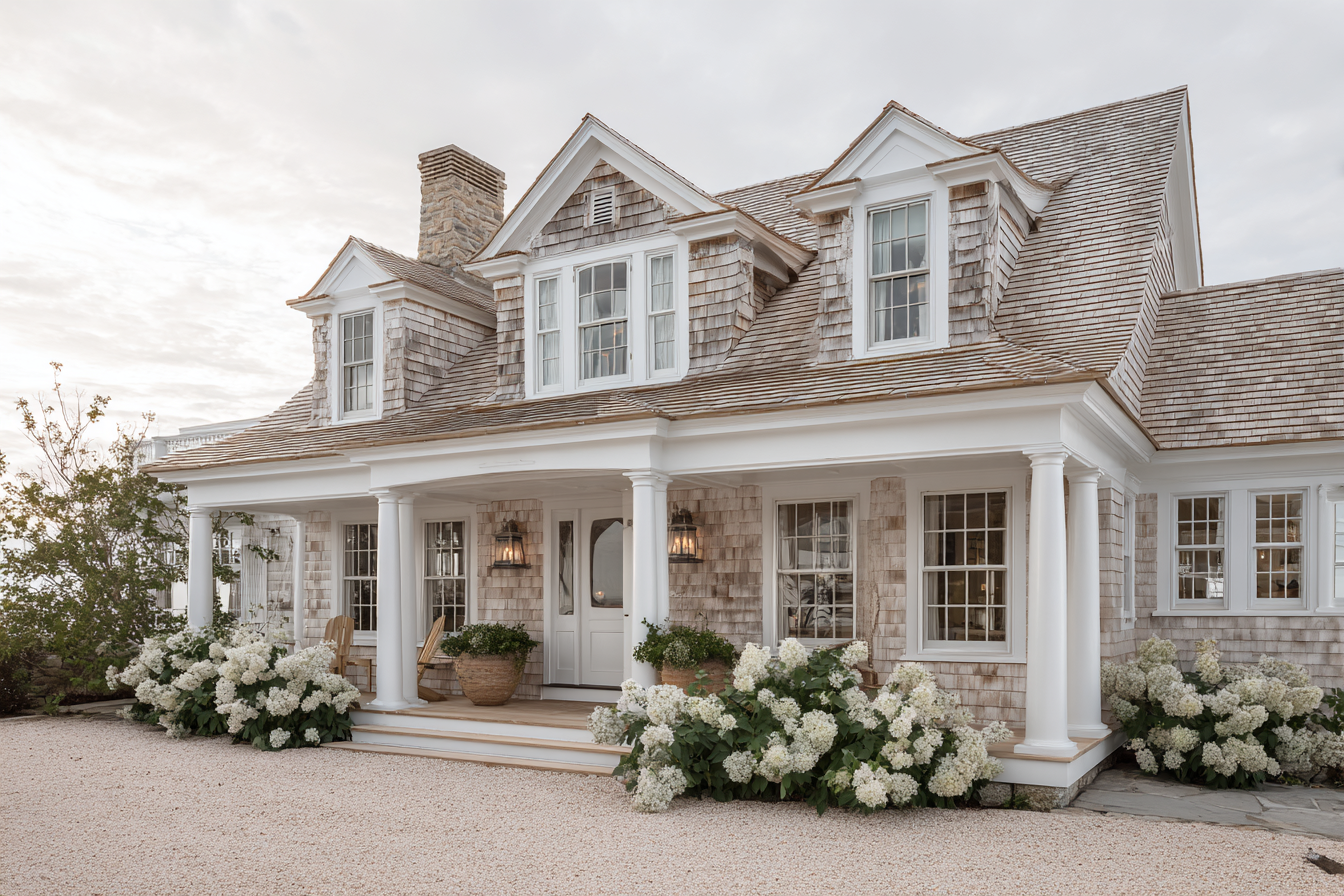
Cedar shingles, front porches, dormers, divided-light windows, and symmetry and proportion are what architecturally define a New England coastal home.
03 ———–
What Most People Get Wrong About Coastal Granddaughter Style
The biggest misconception about Coastal Granddaughter style is that it’s primarily a decorating aesthetic. In reality, it’s closer to a way of building a home that feels relaxed, welcoming, and connected to nature—and that deeper idea is exactly what tends to get lost in translation.
- It’s not beach décor. Timeless coastal homes rarely lean on anchors, ropes, seashell motifs, or anything overtly nautical.
- It’s not all blue and white. Blue plays a real role, but the best coastal interiors lean just as heavily on warm neutrals, soft greens, natural woods, and layered texture.
- It’s not about looking expensive. The most beautiful coastal homes tend to feel collected rather than curated. They collect memories and moments.
- It’s not about perfection. A slightly worn antique table, a stack of well-read books, or a weathered brass lantern usually adds more character than anything brand new.
True New England coastal design isn’t really about achieving a picture-perfect aesthetic. It’s about building a home that feels lived in. Where memorable moments with friends and family happen. Where solo evenings are spent with a good book and a cup of hot tea.
04 ———–
The Interior Design Elements That Matter Most
Architecture provides the foundation, but interior design is what gives a coastal home its warmth and personality. The most timeless interiors in this tradition tend to share two specific traits.
Natural materials always take center stage. Part of why these homes age so gracefully comes down to material choice. Look closely and you’ll typically find white oak, linen, cotton, natural stone, brass, and wicker or rattan throughout. These materials bring texture and warmth while tying the interior back to the natural world—and unlike trend-driven finishes, they rarely feel dated, because they were never tied to a single moment to begin with.
Timeless New England coastal palette is also softer than most people assume it to be. There’s a common assumption that coastal interiors should be saturated in blue. In practice, the most sophisticated New England coastal homes usually contain more neutral than blue: soft whites, warm creams, sand-inspired tones, weathered grays, muted greens, with blue layered in as an accent rather than the whole story. That restraint is what keeps the room feeling timeless instead of themed.
05 ———–
Living Room: Comfortable, Layered, and Collected
The living room is probably where the Coastal Granddaughter aesthetic feels most at home online—but the rooms that actually hold up over time go further than what fits in a single photo.
Rather than filling the space with matching coastal décor, the goal is layering. A typical New England coastal living room tends to include linen upholstery, built-in bookshelves, vintage artwork, woven baskets, brass lighting, natural wood accents, and textiles layered in over time rather than installed all at once. Nothing is overly coordinated. Nothing looks overly styled. The room reads as though it’s evolved naturally—through friend gatherings, family events, and plenty of quiet nights in—and that evolution is exactly what makes it beautiful.
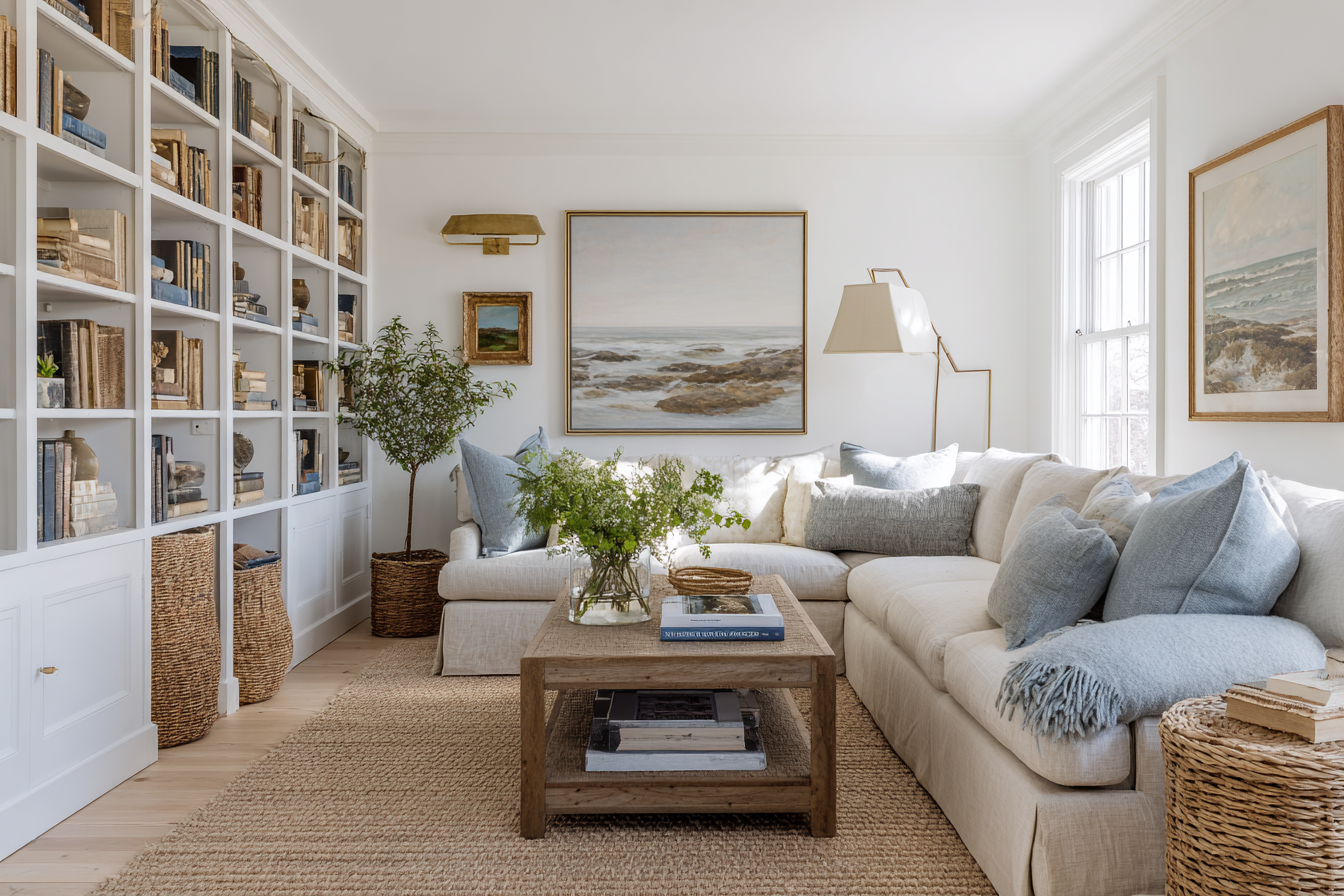
A typical New England coastal living room tends to include linen upholstery, built-in bookshelves, vintage artwork, woven baskets, brass lighting, natural wood accents, and textiles layered in over time.
06 ———–
Kitchen: The Heart of the Home
If one room captures the spirit of this style most completely, it’s the kitchen. Social media tends to highlight the aesthetic appeal of coastal kitchens, but their real success lies in functionality, not aesthetics.
Timeless coastal kitchens often feature shaker cabinetry, natural stone counters, white oak detailing, layered lighting, open shelving used sparingly, and warm brass hardware. They feel welcoming because they’re built around how people actually use a kitchen, in terms of both the space planning and finishes—family dinners, weekend baking projects, conversations that run long after the food is gone.
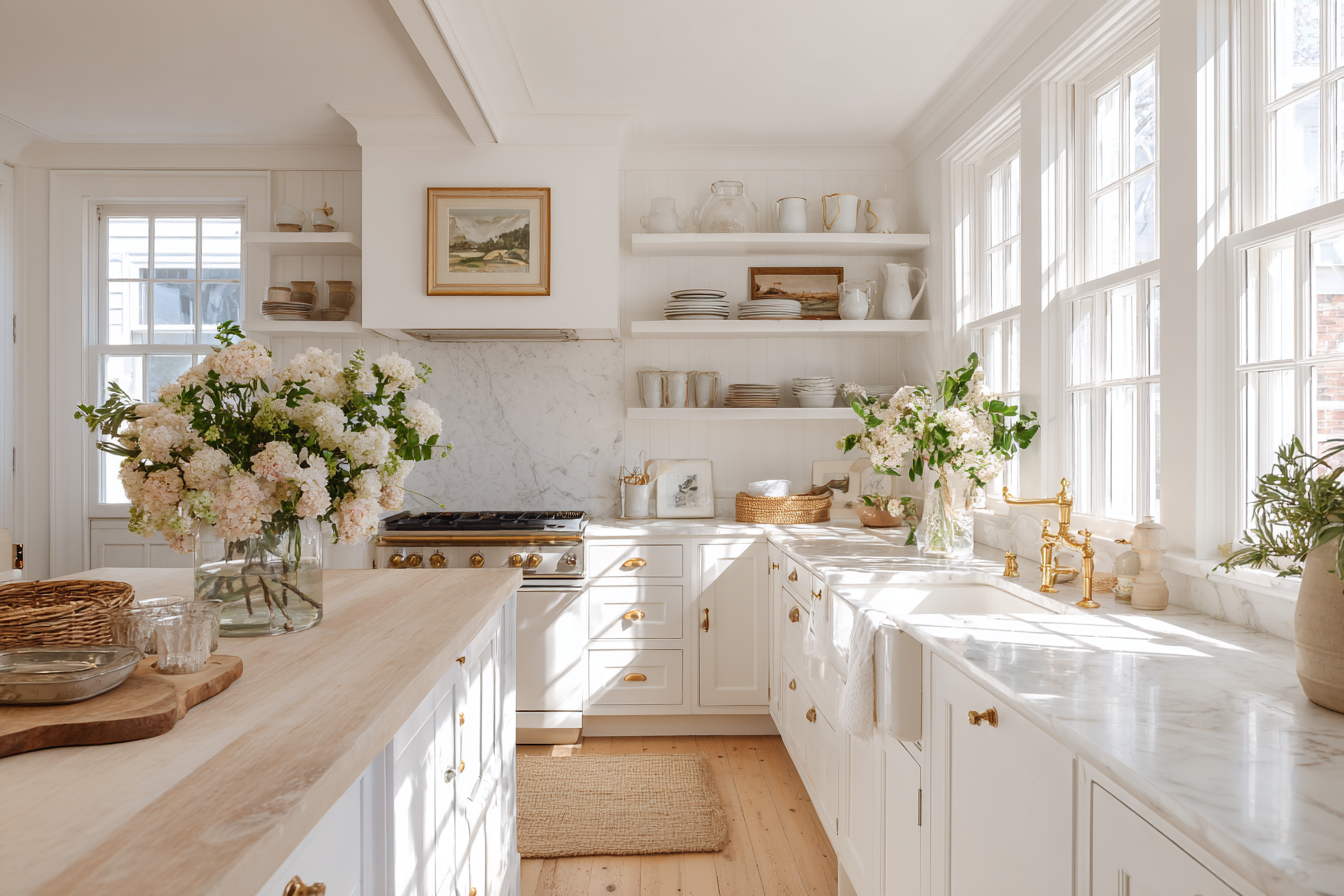
The real success of New England coastal kitchen lies in its functionality, not aesthetics.
07 ———–
Bedroom: Relaxed Elegance
The best coastal bedrooms prioritize comfort above everything else, and they build calm through texture and restraint rather than an overt beach theme: crisp white bedding, soft blue accents, linen drapery, natural wood furniture, layered lighting, fresh flowers. The result is a room that feels restorative and timeless—which is, after all, exactly what a bedroom is supposed to do.
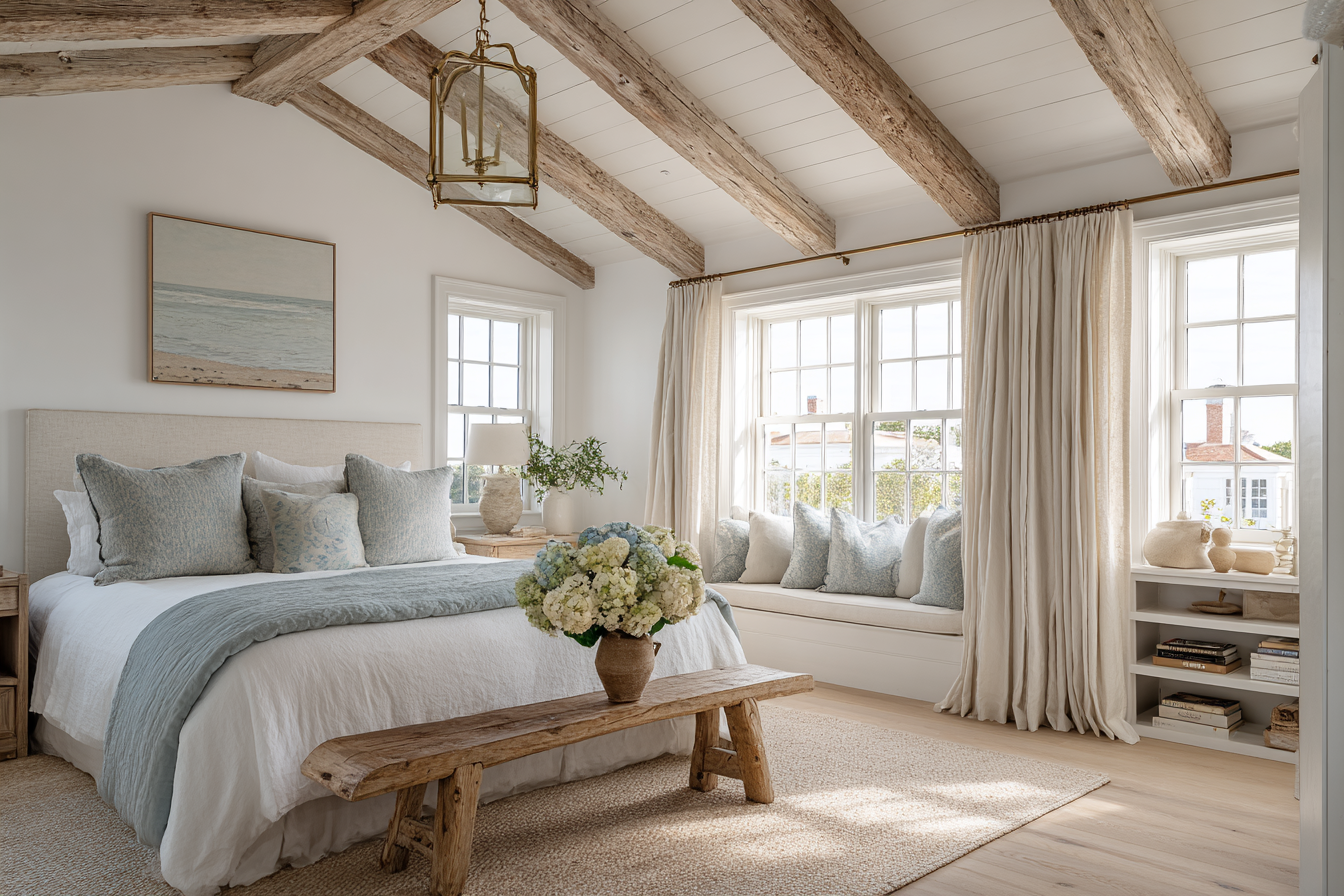
The best coastal bedrooms prioritize comfort above everything else, and they build calm through texture and restraint rather than an overt beach theme.
08 ———–
Porch and Mudroom: The Often-Overlooked Spaces
One of the more telling omissions from most Coastal Granddaughter mood boards is the absence of these two spaces that matter enormously in real New England homes.
- Porches. A traditional porch isn’t decorative—it’s an outdoor room. A place to read, gather with family, or sit through a summer evening surrounded by hydrangeas and lavender.
- Mudrooms. Not glamorous, but essential. Mudrooms embody one of the defining traits of coastal living: practicality. They absorb the mess of real life while protecting the relaxed elegance of everything around them.
Both spaces reflect the same underlying philosophy—prioritizing living well over simply looking good.
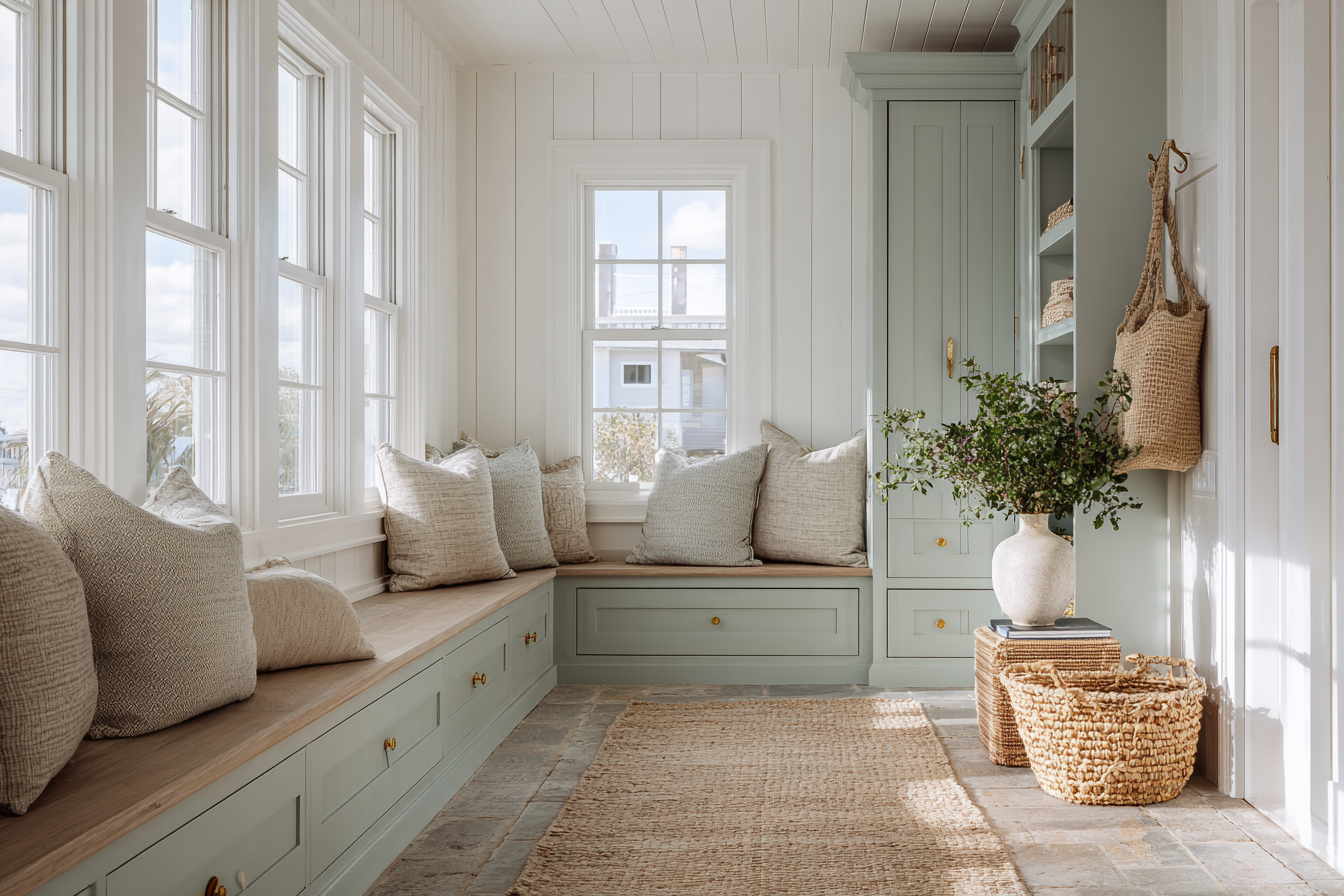
Mudrooms absorb the mess of real life while protecting the relaxed elegance of everything around them.
09 ———–
Exterior Elements That Complete the Timeless Look
Interiors get most of the attention, but the exterior carries just as much of the style. A timeless New England coastal home typically includes a few recurring elements:
- Hydrangeas. The most recognizable coastal flower, offering softness and seasonal color.
- Boxwoods. Structure and year-round appeal.
- Lavender and climbing roses. Fragrance, texture, a touch of romance.
- Lantern lighting. Warmth and character that also does real work for curb appeal.
- Window boxes and natural landscaping. The details that make a home feel connected to its surroundings rather than dropped onto them.
The goal is not to have a perfectly manicured exterior; it is to have one that feels natural, welcoming, and is built to last.
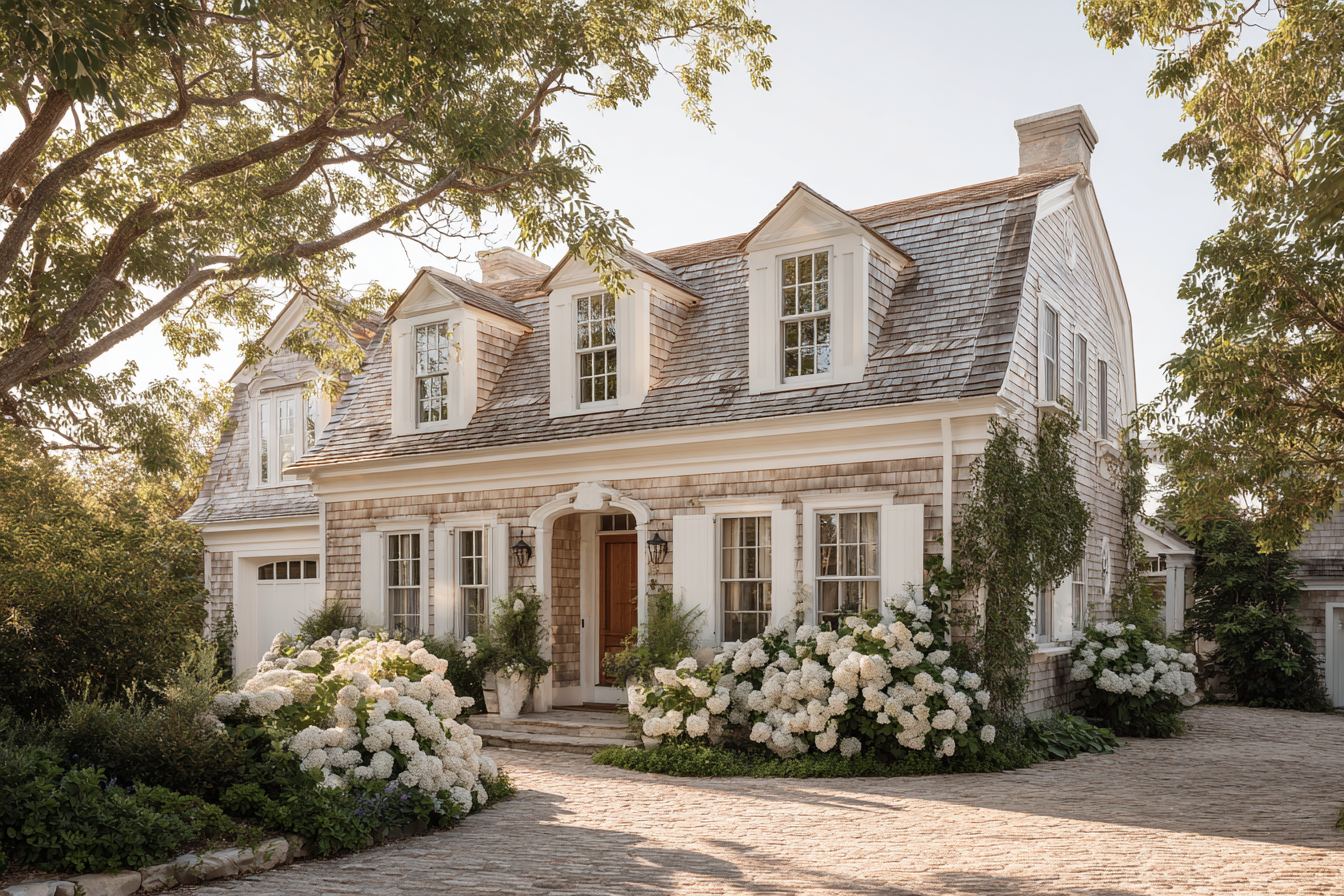
The exterior of a timeless New England coastal home typically features hydrangeas, boxwoods, lavender, climbing roses, lantern lighting, window boxes, and natural landscaping.
10 ———–
Architect’s Perspective: Five Ways to Achieve Coastal Granddaughter Style Without Looking Trendy
If the Coastal Granddaughter aesthetic appeals to you—and there’s a lot to like in it—here’s how to keep the substance and lose the expiration date:
- Start with architecture, not accessories.
- Use natural materials whenever you can.
- Layer blue thoughtfully instead of using it as a primary color everywhere.
- Bring in vintage and collected pieces.
- Prioritize comfort over perfection.
These five hold up well past any single trend cycle—because none of them were trend-dependent to begin with.
11 ———–
The Bottom Line: What Lies Beyond the Trend
The popularity of the Coastal Grandmother and Coastal Granddaughter styles says something worth paying attention to. People weren’t really drawn to hydrangeas, or blue-and-white décor, or Nancy Meyers-inspired kitchens, not exactly. They were drawn to the feeling those homes create: comfort, a connection to nature, a slower pace, a sense of being welcomed rather than performed at.
The trend succeeded because it tapped into genuinely timeless ideas. But the most beautiful New England coastal homes go further than the trend ever did. They combine thoughtful architecture with layered interiors. They celebrate craftsmanship, natural materials, and the small rituals of everyday life. And they become more beautiful not by following a trend, but by gracefully outlasting one.
In the end, the best coastal homes aren’t built around an aesthetic. They’re built around a way of living—and that’s a style that never really goes out of fashion.